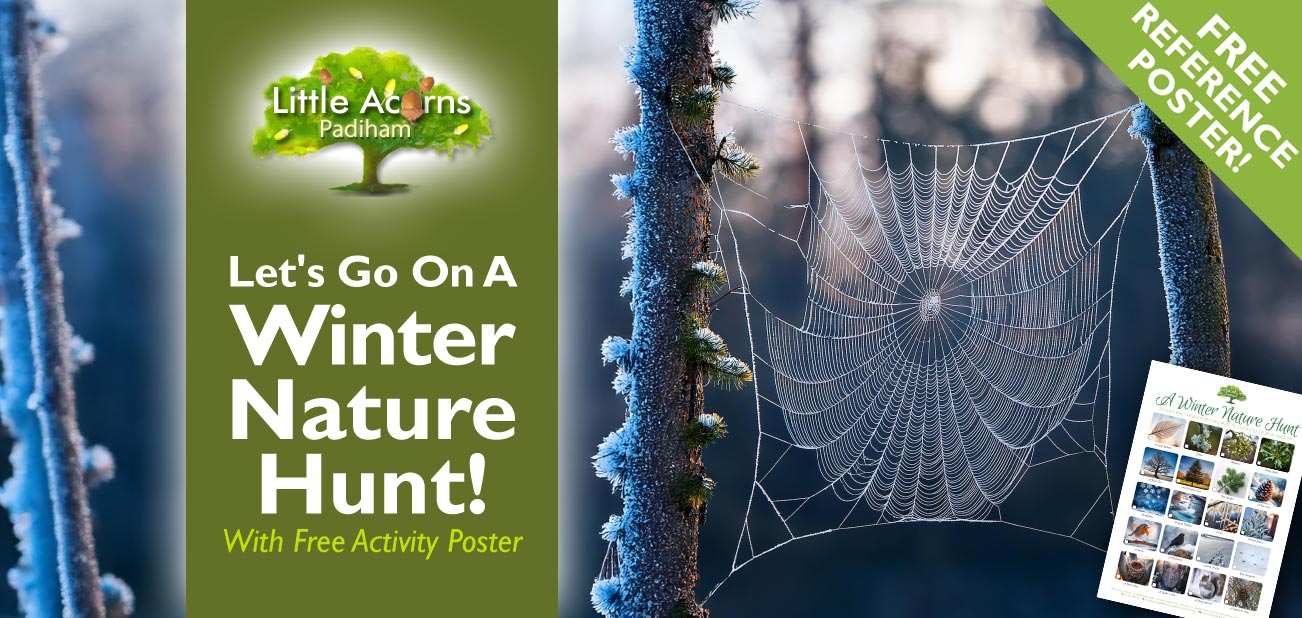
Winter has arrived, and, along with this new, cold season, come some remarkable things for children to see outside in the natural world — and that’s exactly what today’s post is all about. It’s a challenge to little ones to see if they can spot 20 nature-related things outdoors over the coming winter months. What’s more, it comes with a free poster that children can download, print out, and use for reference while they’re out and about on their Winter Nature Hunt.
When Is Winter?
According to the Astronomical calendar, winter arrived with us on December 21, 2025, at what’s known as the Winter Solstice, the shortest day of the year. It’ll remain with us until the Spring Equinox on March 20, 2026, when days and nights once again even up to become virtually of equal length.
In contrast, winter is said to arrive on the first day of December and end on the last day of February — 3 whole calendar months — according to the Meteorological Calendar. That particular calendar works in ‘full’ months as a way of keeping things simple, for example, for weather services and records.
What Can Children Look Out for in Winter?
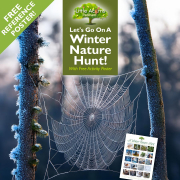
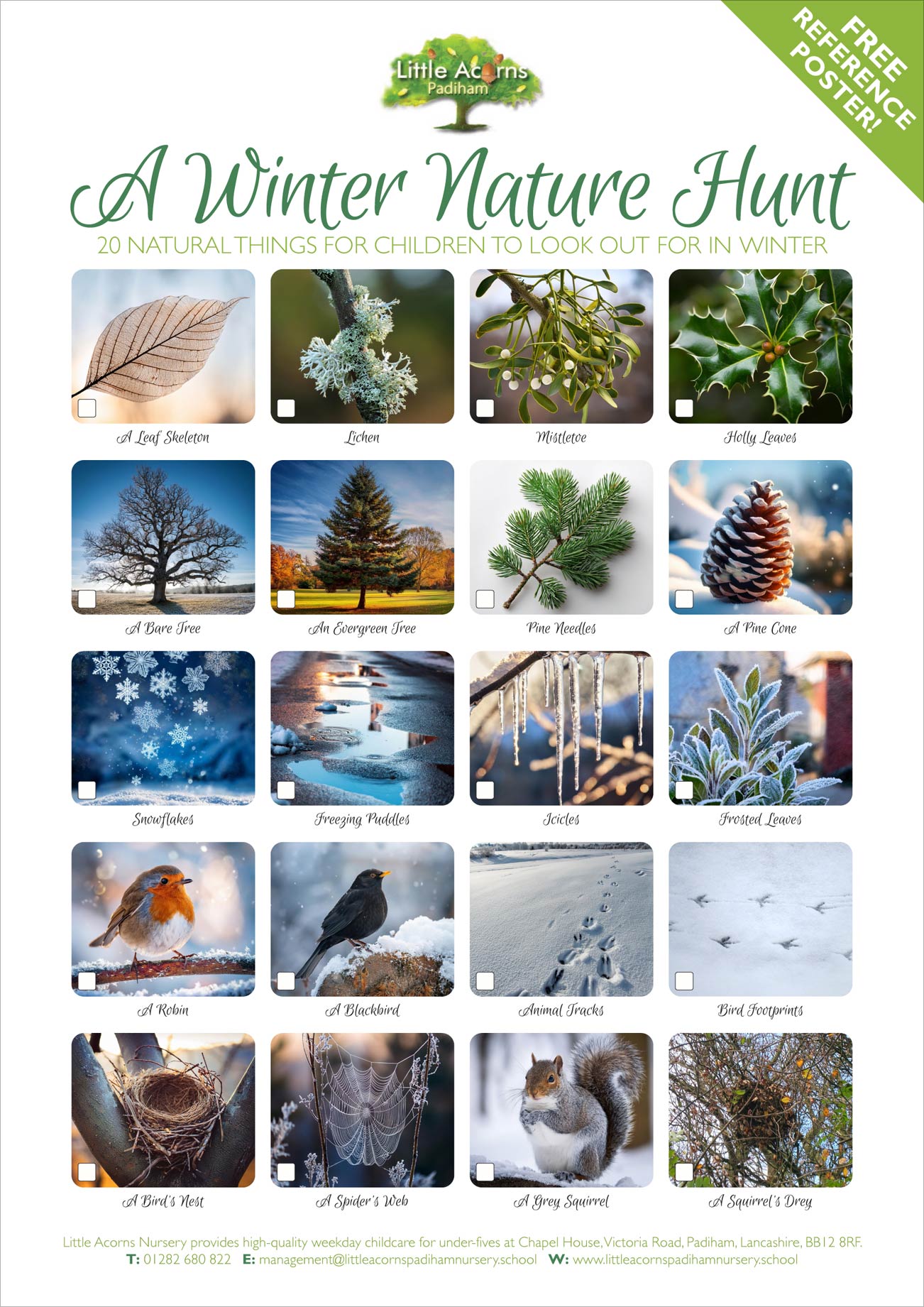
Take a look at the preview of the reference poster below and the commentary that follows. Despite winter being the season when nature is mostly dormant, it is packed full of interesting and exciting things for children to look out for. Download or view the poster by clicking it, then save it to your device, and print it out to A4 or A5. Children can take this with them on their Winter Nature Hunt and see how many of the 20 suggestions they can discover. Tick boxes are provided.
Magical Snowflakes
With winter arriving, it’s certainly cold out there! That means that snow is more likely to arrive at some point. When it does, children can look out for the little miracles that are snowflakes. Each one is amazing, as children will see if one lands softly on their winter jacket or gloves. By looking closely, your little one will see the intricate 6-pointed shape that’s unique to each flake. Snowflakes really are miraculous! They will both enthral and amaze children if they take a moment to look carefully and compare one snowflake to another.
Icicles
Once the snow starts to thaw, children can also look out for another natural wonder on our Nature Hunt list — icicles. They’re beautiful too, in their own way, each telling a story of the dripping water that’s formed them.
Animal & Bird Tracks
When there’s a blanket of snow on the ground, children will also be able to look out for animal tracks and the footprints of birds. If there’s no snow, it’s still possible to do so by looking in patches of mud (all such activities undertaken with close adult supervision, of course). Such prints are a great way to see which creatures have been passing through at some point earlier in the day or night.
Frost-Encrusted Plants, Trees & Spiders’ Webs
Frost is also rather magical when it arrives, especially first thing on a winter’s morning when it coats literally everything. Children can look out for leaves, grasses, and even spiders’ webs bejewelled in the tiny crystals of ice that make frost. They make the landscape’s plants and trees look magical! And those spiders’ webs look so incredibly decorative when coated, whether by frost, morning dew, or even raindrops. Nature is incredibly beautiful, and children will instinctively be drawn to such wonder.
Leaf Skeletons
Leaf skeletons are another natural wonder for children to look out for. They may not be so easy to discover, but they are out there if children take the time to look. Once found, children will be delighted and intrigued by the fine, structural filigrees that make up the leaf shapes. Leaf skeletons are also something children can take home to press between the pages of a book or pad, so they dry flat. They can be used simply as keepsakes or as part of a creative activity of some kind.
Winter Visitors Like Birds & Squirrels
Let’s also not forget some of the feathered and furry friends that little ones can look out for in winter. On the free poster, we’ve highlighted just three as a starting point — robins, blackbirds, and grey squirrels. All such creatures may become regular winter visitors if the right food is provided. Birds love sunflower hearts and grated Cheddar cheese, for example (learn more in our Simple Bird Feeders guide). Squirrels love nuts, seeds, and sunflower hearts too, as well as bird-safe peanuts. Such foods are very much welcomed by many of nature’s garden visitors over winter, when natural food sources are so depleted.
Lichen, Mistletoe, Pine Cones, & Much More
Other items that will intrigue children are also included on the free poster, for example, lichen, mistletoe, pine cones, and pine needles. Speaking of trees, we also highlight two major types of trees for little ones to look out for and compare; evergreens have leaves or pine needles all year round, while deciduous trees shed leaves in autumn and have bare branches throughout winter. All such natural occurrences can spark educational conversations between parent and child. Children can learn so much from nature and the world around them. Our poster is just a starting point, though, and there are many more interesting, educational, and amazing things to look out for during the winter months if children and families take the time to proactively look. Nature is amazing but, what’s more, nature is incredibly good for children (and adults). This is therefore a very worthwhile activity — have fun!
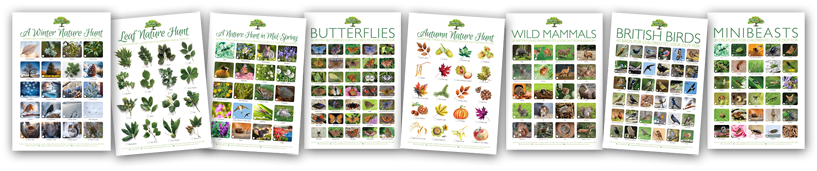
More Free Nature Activity Posters for Kids!Today’s Winter Nature Hunt activity is one of a series that each comes with a free, downloadable poster for children. So, why not also try our Spring Nature Hunt activity, Autumn Nature Hunt, and Leaf Nature Hunt activity? We also have a free British Land Mammals poster, Minibeast spotting poster, Bird spotting poster, and Butterfly spotting poster for families to use as the basis of more outdoor activities. Click the bold links for more information and free downloads.
|
Little Acorns Nursery
Padiham’s Premier Childcare Service
 Little Acorns Nursery is a wonderful weekday childcare setting in Padiham, where children’s learning and development are nurtured in a warm, home-from-home setting. With its own garden and nature zone, little ones get to enjoy nature safely on-site, as well as benefit from the fabulous activities, resources, and facilities indoors. Recognised by Ofsted as a good childcare provider, Little Acorns really is an excellent choice for early years childcare.
To learn more, enrol your child for a place, or come for a guided visit, please get in touch today:
Little Acorns is a high-quality nursery in Padiham, Lancashire, that provides first-class weekday childcare to local families, virtually all year round. As well as serving those in Padiham, we may also suit families nearby in places like Hapton, Rose Grove, Burnley, Altham, Huncoat, Read, Simonstone, Sabden, Higham, and Wood End.
Safety First!
Don’t forget: children, particularly the youngest, should always be accompanied and supervised by a parent or responsible adult when exploring outdoors — there are many hazards out there!
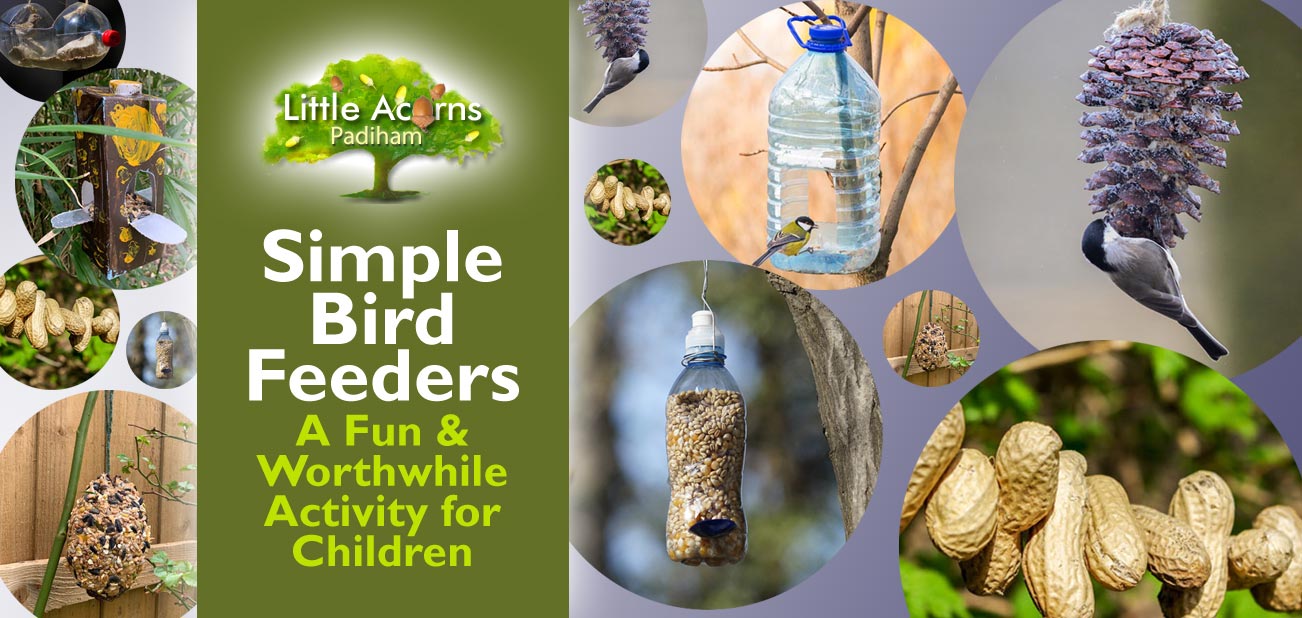
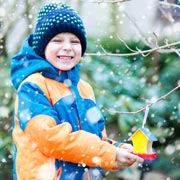 One fantastic way to encourage children to connect with nature from an early age is by making homemade bird feeders. It’s a hugely popular activity amongst children of all ages, so today’s post is all about how to get started with your child. Although bird feeders can be made at any time of the year, the activity is perfectly suited to the winter and early spring. At this time, wild birds like robins, blackbirds, doves, and sparrows are really struggling to find food. And, with World Wildlife Day arriving in the first week of March, it’s very timely. Take a look!
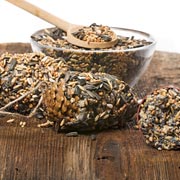 A large, dry pine cone
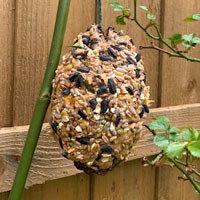 Tie a piece of string securely around the top of the pine cone to create a hanger. Then, let your child spread peanut butter all over the pine cone using a spoon or butter knife. Next, roll the sticky pine cone in a tray of birdseed until it is fully coated. Once completely covered in birdseed, hang it outside on a tree branch or hook and watch as birds come to enjoy their treats!
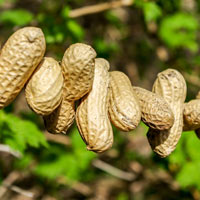 Carefully thread the string through the outer shell of the monkey nuts, tying knots if needed to keep them spaced apart. Once you have a long garland, either tie the ends together to form a loop that can be suspended vertically or attach each end to stretch them horizontally between branches of twigs on a tree or bush. Once birds are used to the new addition to the garden, watch as blue tits, great tits and others enjoy cracking open the shells!
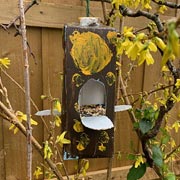 Cut out one or more large holes on the sides of the carton to create openings (adults should do this part for younger children). Thread can be attached at the top – try trapping it under the lid or get an adult to thread it through a hole. Let your child decorate the feeder with paint, stickers, or non-toxic markers. Fill the carton up to the opening(s) with birdseed and hang it up in your garden or balcony.
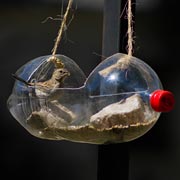 A clean, empty clear plastic water bottle
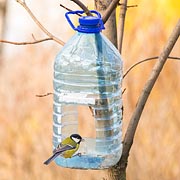 There are a few options for this type of bird feeder, as indicated in the photo examples. Either way, small feeding holes or ‘hatches’ will need to be cut (by a supervising adult) as openings. Optionally, cut small holes on opposite sides of the bottle and insert wooden spoons or sticks through them to create perches. Fill the bottle with birdseed and tie a string to hang it outside. Watch as birds land on the perches and enjoy their treats!
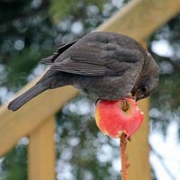 Expose some of an apple’s sides by removing some of the skin. Then, either attach string through (or around) the apple and hang it from a branch outside, or push a stick into it (carefully aimed away from you in case it goes right through) and push the other end into the ground. Watch as birds peck away at the tasty treat! Blackbirds, in particular, love apples!
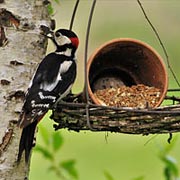 Our personal favourite and key recommendation is sunflower hearts. These are the little kernels inside sunflower seeds and the good news is that by buying them as sunflower ‘hearts’, birds don’t need to remove the shells. Robins, blackbirds, doves, dunnocks, bluetits, great tits and pigeons love them! They’re generally inexpensive, in our experience, and are available widely, including in supermarkets.
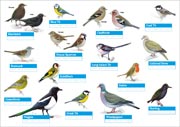
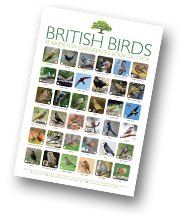
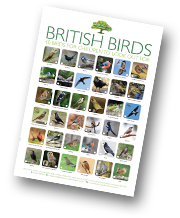 Once your bird feeder is in place, keep an eye out for common garden birds. Typically, birds that are attracted to bird feeders in gardens include robins, bluetits, sparrows, and dunnocks although it does depend on what food you put out for them. Children are also likely to see larger birds like blackbirds, doves, pigeons, magpies and even crows, as they are likely to scavenge underneath for seeds that have dropped from the feeders. To help children identify which birds visit, ensure you have printed out our
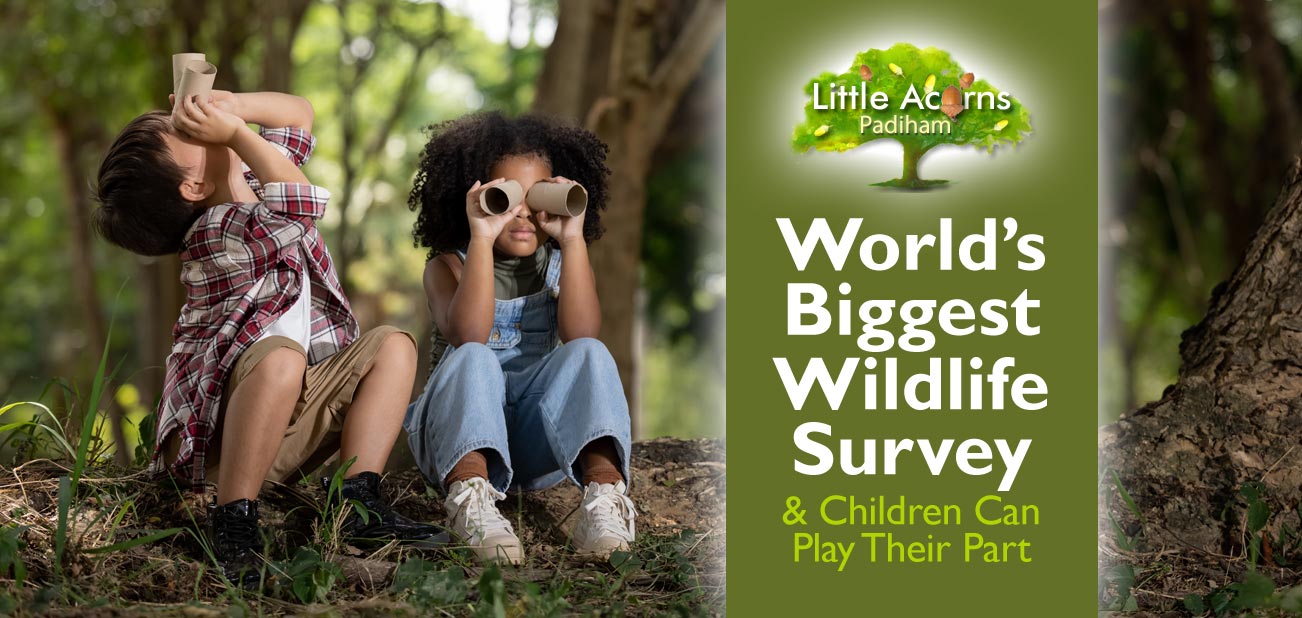
 Children, adults, and whole families are gearing up to take part in the world’s biggest garden wildlife survey in early 2025. Organised by the RSPB (Royal Society for the Protection of Birds), the Big Garden Birdwatch requires just one hour of your time during late January 2025. It’s free, hugely worthwhile, and will benefit nature, conservation, and children themselves. So, why not set a date for your diary and take part? Today’s post explains how to enrol, what to do, and how it will benefit all parties involved.
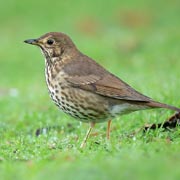 The Big Garden Birdwatch is designed to keep tabs on wild bird populations in the UK. It’s a survey that’s been undertaken across the UK every year since 1979 and allows the RSPB and conservationists to monitor whether any bird species are under threat. Sadly, survey findings in recent years have found this to be the case, with overall bird populations having declined by a staggering 38 million in the last 60 years. Song thrushes alone, for example, have declined by 80% and even the UK’s most populous bird species, House Sparrows, have declined by 57% since the survey began.
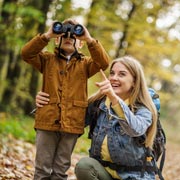 The Big Garden Birdwatch is also a great way to get children outdoors, close to nature, and to introduce them to the concept of nature conservation. By taking part, children can contribute to bird conservation as well as directly benefit in a number of ways themselves. For example, they can
  Enrolling your child or family into 2025’s Big Garden Birdwatch is easy and free. Simply
  Decide on a natural spot where you’ll undertake your hour’s birdwatch. Your garden, local park or even a balcony will do fine.
 Enjoying Birdwatching?