 At the time of writing, it’s peak butterfly-spotting time — more adult butterflies can be seen in late July and early August than at any other time in the year. That makes it the perfect time for children to get out in nature to spot these charming creatures. Doing so is fun, educational and also beneficial in so many ways – we’ll explain more about that later.
Fun Fact: About 60 different types of butterflies can be found in the UK.
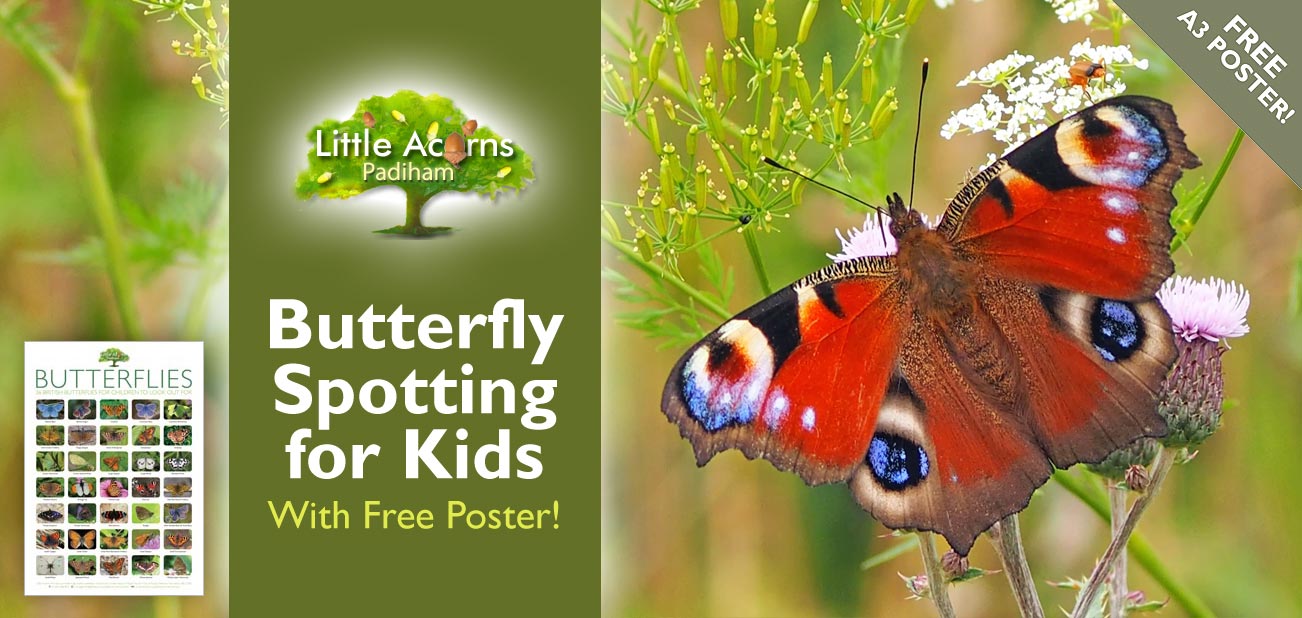
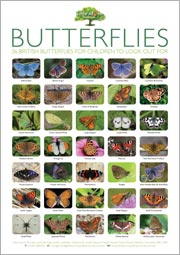
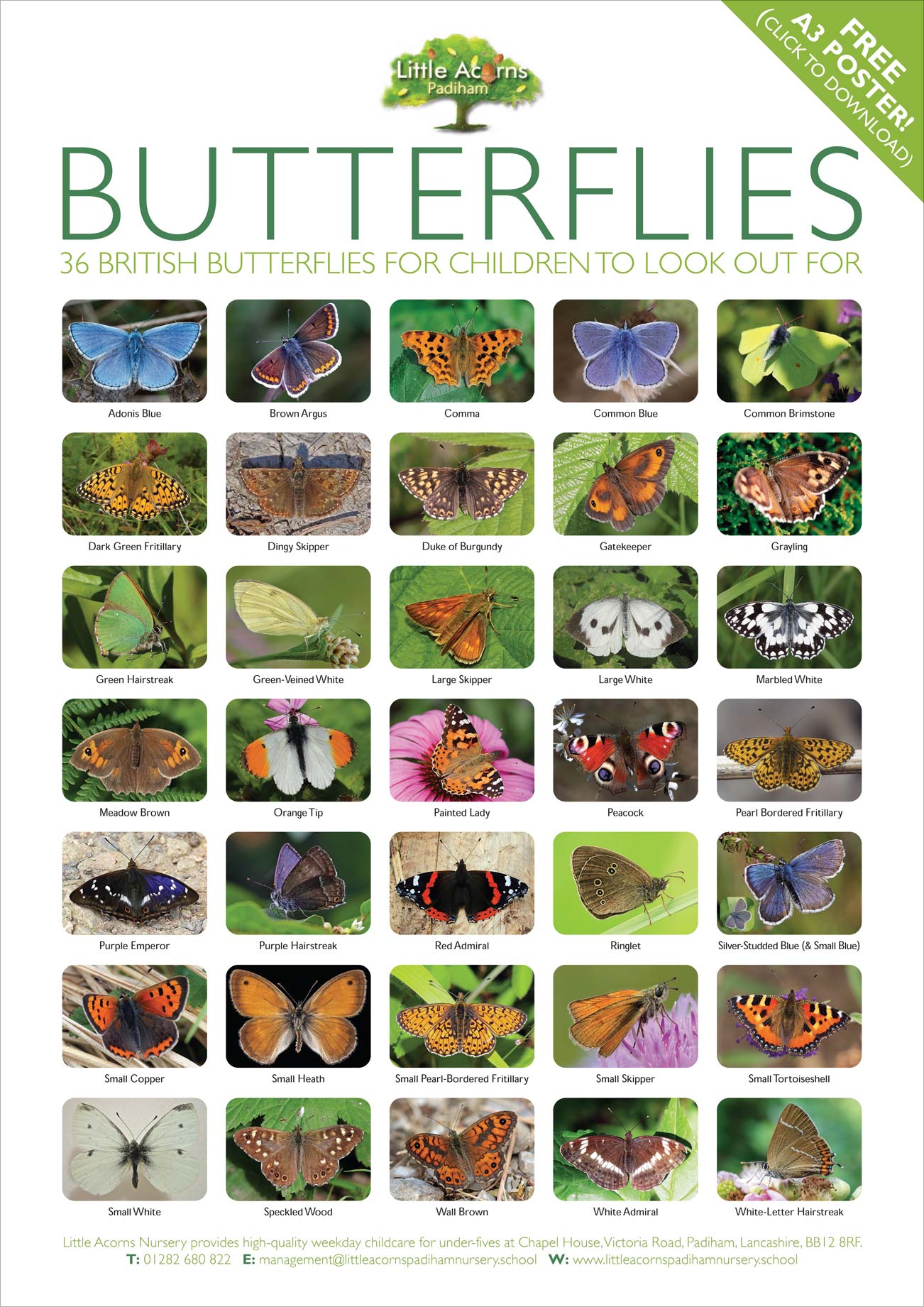
Butterflies come in many different forms and sizes, often with incredibly beautiful patterns and colours on their wings. They are also rather endearing as they flit around on seemingly haphazard flight paths. As such, infants, toddlers and young children will naturally be drawn to them when they see them flying around flowers, gardens and hedgerows. With that in mind, we have designed a free butterfly identification poster for families to download. It features 36 different types of butterflies that are commonly seen around large parts of the UK. The poster can be printed out for children to display on bedroom or nursery walls, or for use as a hand-held reference when out and about on butterfly-spotting nature trips. Take a look at the preview below — full instructions for printing it out or viewing it on screen are explained below the preview. The poster is free to download and you do not need to sign up for anything, nor register in any way.
Butterfly Poster Preview
The preview image below shows the 36 wonderful butterflies that are included on the identification poster. However, be sure to download the Acrobat PDF version for greater clarity and detail.
Download Instructions
Depending on your specific device and browser settings, the high-resolution Adobe Acrobat version of the poster can be viewed and/or downloaded by left- or right-clicking the preview image above, or alternatively use this link. If you do not already have it on your device, Acrobat Reader can be downloaded for free. ∞
Amazing Fact: The Painted Lady butterfly flies all the way from Europe or Africa, travelling thousands of miles, before arriving in the UK for the summer. When travelling, they fly up to 100 miles per day, travelling almost 30 miles per hour. Unlike some other butterflies, Painted Ladies do not hibernate in Britain, instead migrating back to Europe or northern Africa.
Butterfly Spotting Has Many Benefits
The Benefits of Butterfly Spotting to Children
Butterfly spotting is a delightful and almost magical activity for children to take part in. On a simple level, it’ll help children learn the names of different butterflies and open their eyes to some of the UK’s wonderful wildlife. On a deeper level, though, it’s hugely educational by teaching children about nature and the natural world more widely. Through the simple task of butterfly spotting, children will get to understand the important role of butterflies, bees and other insects as pollinators. They’ll learn about concepts like metamorphosis, where food comes from, how plants, trees and creatures reproduce, the circle of life, and even about their own place in the world. These are profound and important concepts.
Spending time in and around nature is also hugely beneficial to children in mind, body, spirit and even academically. That conclusion is supported by study after study, all around the world. Indeed, we have written a separate article about the benefits of nature to children. Take a look by following the bold link.
Some of the Benefits to Butterflies & the Natural World
Nature-based activities like butterfly spotting will also begin to foster a deeper appreciation in children for the natural world and the flora and fauna within it. Children who regularly spend time in and around nature will tend to develop an affinity for it, right into adulthood. As well as enjoying everything that the Great Outdoors has to offer, children who are used to spending time in natural environments are often more environmentally conscious, with a greater sense of empathy for other creatures and a more responsible attitude around the impact that humans are having on the planet. And, as we’re seeing in recent news about global warming, climate change and the effects on recent weather patterns, such attitudes have never been more important. Children are the planet’s future, so encouraging them to look after the natural world is crucial for its very survival. The human race needs to act decisively to reverse both climate change and habitat loss so that wildlife populations can begin to recover. If there were no pollinators, then we’d all be in deep trouble.
The Best Places to Spot Butterflies
There are some obvious, and not-so-obvious, places where children are most likely to see the most butterflies:
- Around flowers and blossoms, as nectar is their food.
- Especially around butterfly-loving plants like Buddleia, also known as the ‘Butterfly Plant’.
- Around calm, sheltered, sunnier spots, especially in the middle of the day — although they’re around any time of day if it’s warm (above 20ºC if it’s cloudy). Butterflies are delicate and do not like the wind.
- Butterflies love brambles, flower meadows and forest clearings (‘glades’) where wildflowers grow.
- They’ll also be drawn to forests and glades where a variety of different tree and plant species are growing at different stages of development.
- Areas with long grass and hedgerows are good spots if they contain wildflowers.
Look But Don’t Touch
Butterflies are very delicate creatures, with wings that are easily damaged. Therefore, teach children not to try to catch or hold them. It’s best if families simply look rather than touch. Also, try to keep fairly still because butterflies can sense movement from multiple directions and are constantly on the lookout for danger.
Little Acorns Nursery & Preschool, Padiham
Children also get to immerse themselves in nature-based activities at Little Acorns Nursery in Padiham, where we offer high-quality weekday childcare for babies and children under five. The service is much more than that, though, as we give children the very best start in life, nurturing them in their early years to become the very best version of themselves by the time they leave us to start school. Their learning and all areas of personal, social and emotional development come on in leaps and bounds during their time with us. This gives them all the tools they’ll need to thrive going forwards. We also support all the free childcare schemes offered by the Government to eligible families, including free childcare hours for 2-year-olds and up to 30 free hours per week for 3 and 4-year-olds and much more.
For more information, to register for a childcare place, or request a guided tour with your child, please get in touch using an option below:
Little Acorns is a nursery & preschool in Padiham, also being convenient for families nearby in Hapton, Rose Grove, Burnley, Altham, Huncoat, Read, Simonstone, Sabden, Higham and Wood End.
 Usually, you will need to pay for childcare costs first and then reclaim them through your Universal Credit childcare support account. However, there are some circumstances where you may be able to get some of your childcare costs paid upfront through the scheme. This recent change is designed to help families essentially with cash flow so that a major barrier to working is removed. That, in turn, will also help the economy.
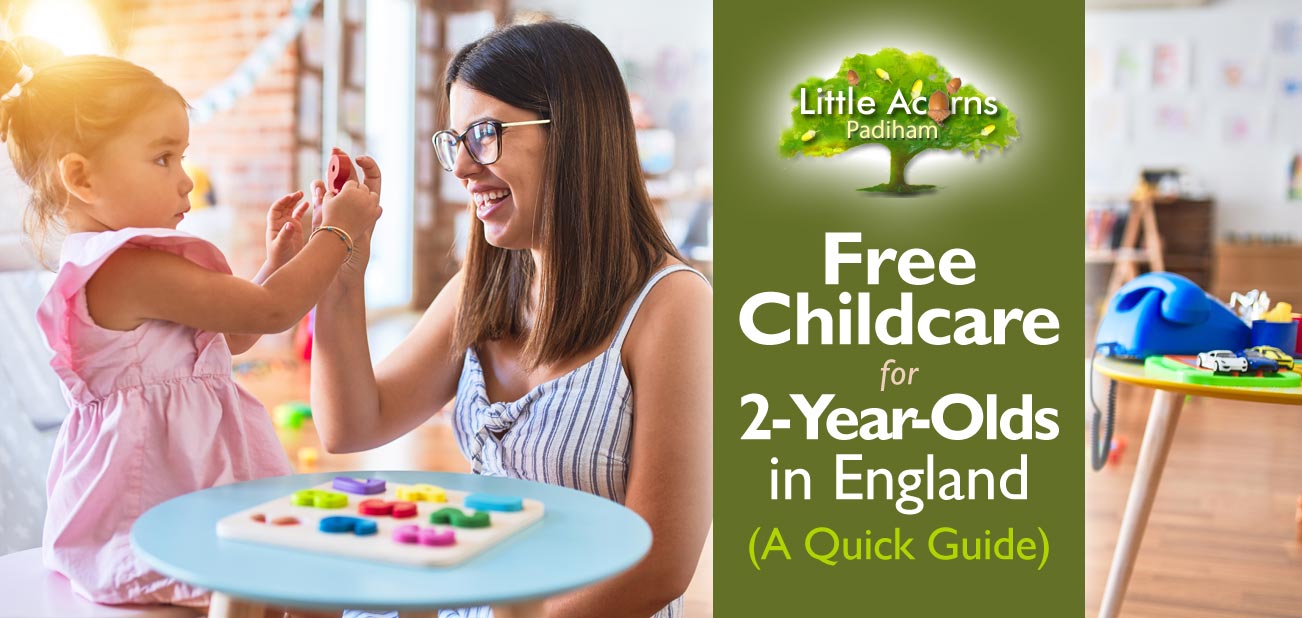
 Eligible 2-year-olds can get a total of 570 free childcare hours during the course of a year. The entitlement is usually taken as 15 hours per week over 38 ‘term time’ weeks. However, families may wish to ask childcare providers if they can use the hours in a different way. For example, some may wish to stretch the hours out over 50 or so weeks of the year, in which case it would equate to approximately 11½ free hours per week. The nursery or childcare provider would need to confirm what’s possible. Any extra hours will need to be paid for by the family and the same is usually true for things like nappies, special trips and meals. Even so, 570 free childcare hours should really help families and may allow a stay-at-home parent to get back into the workplace sooner, even if only part-time.
 Children aged two that live in England may be eligible if their parents/household are in receipt of one or more specific Government benefits. These include:
 If none of the benefit-related criteria above applies, children aged 2 may still qualify for the childcare funding scheme in the following circumstances:
 The last category of eligible claimants is some 2-year-olds living in England who are non-UK citizens, whose households cannot claim benefits and whose household income is below a certain threshold. Thresholds vary from £26,500 to £38,600 depending on how many children the family has and whether they live inside or outside of London.

 This is what we call our blog (short for ‘web log’) where we regularly publish guides and useful information for parents of children under five.
  We’re @NurseryPadiham on Twitter, so you can follow us at
  We’re @TotsNursery on Facebook (because we took over the Adventure Tots childcare business), so you can follow us at
  We’re @LittleAcornsNurseryBB12 on Instagram, so you can follow us at
  We’re also @LittleAcornsNurseryBB12 on Pinterest, so you can follow our pins and boards at
  We appreciate that, if you’re reading this, you’ve already found us. However, if you ever need to find us again and aren’t sure where to look, we’re also on Google.
  If you’re a parent of a current child at Little Acorns Nursery in Padiham, why not write us a review? You can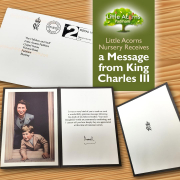
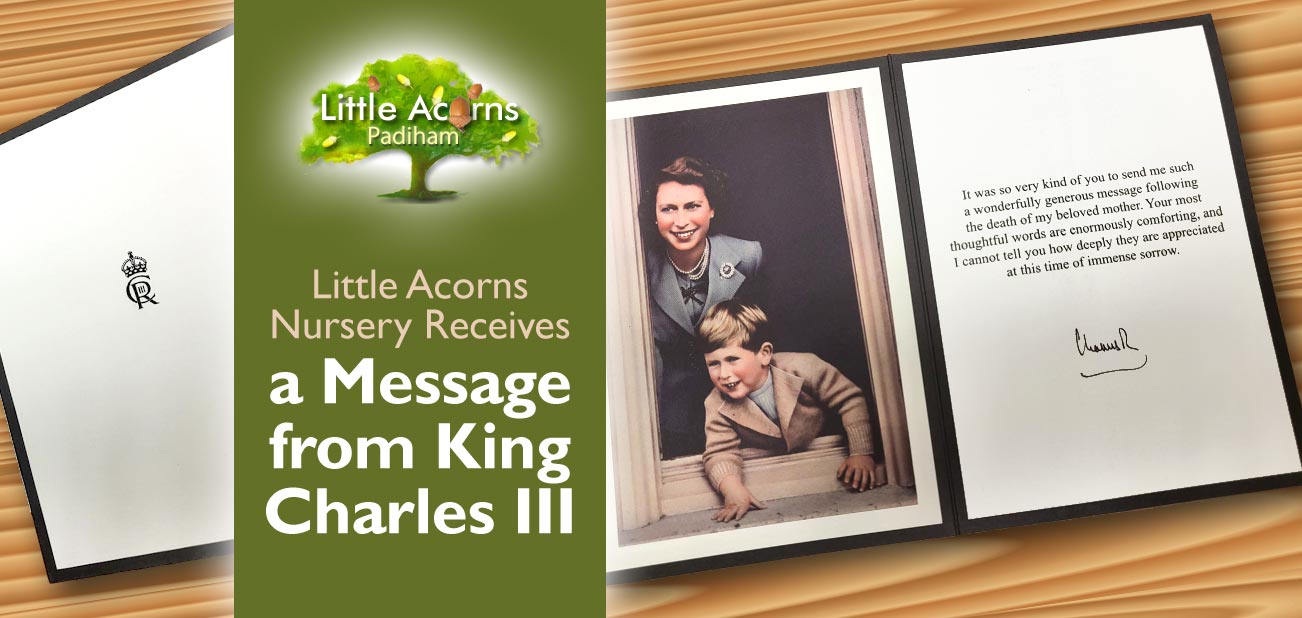
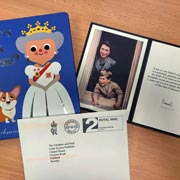 Then, in early February, to our surprise and absolute delight, we received correspondence notably featuring a postmark from Buckingham Palace and a Royal crest. It was addressed to the children and staff at Little Acorns Nursery, Padiham. Inside was a beautiful and heartfelt reply card and message, sent by none other than King Charles himself!
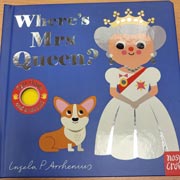 The eagle-eyed will notice that the little photo above also shows one of the nursery children’s most popular books, “Where’s Mrs Queen?” by Ingela P Arrhenius. Part of a series, this ‘early years’ book features charming illustrations and interactive felt flaps inside. The children can use these to reveal London-themed characters like a policeman, a bus driver, a soldier and Her Majesty Queen Elizabeth II herself (and a corgi dog, of course). The final page even integrates a surprise mirror, so the children can reveal their own faces — much to their delight and amusement! It’s a simple but fun, interactive and, importantly, sensory book for the little ones to discover and explore.
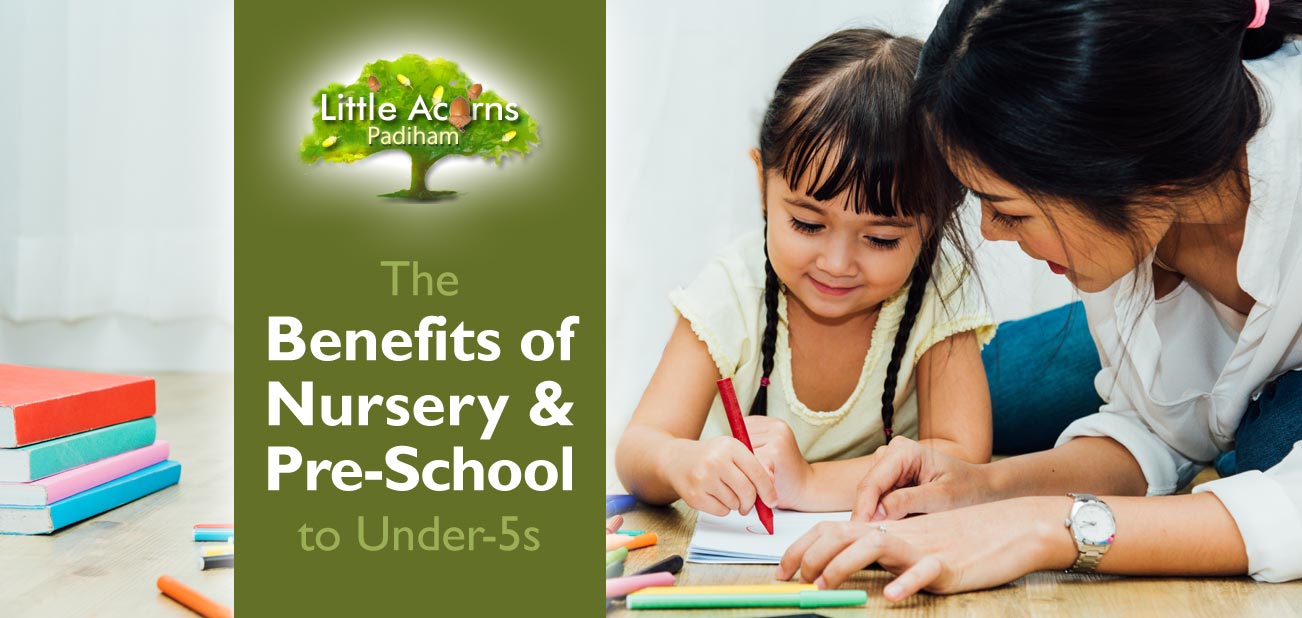
 A good nursery or pre-school is so much more than just a crèche, playgroup, kindergarten or childminding service.
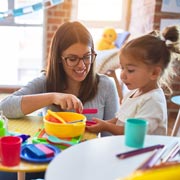
  Nurseries like Little Acorns in Padiham provide a dynamic environment where children mostly learn through different types of play and pre-planned, carefully structured activities. Much of their learning is achieved through the application of the
  A good early years childcare provider like Little Acorns will also nurture every aspect of children’s personal development. Research suggests that starting childcare and a good early years education at a young age can have significant positive effects on children’s development.
 Spending time at nursery and pre-school provides children with countless opportunities to interact with peers and to learn to socialise with others. Through doing so, they’ll develop their social skills generally, including things like learning good manners, needing to sometimes share or take turns, learning about mutual respect, and following rules.
 Good nurseries and pre-schools like Little Acorns welcome and support children of all abilities. As part of this and whenever possible, they will create an inclusive environment for children with special educational needs or disabilities (SEND). They’ll support them in every way they can including, where possible, provision of special equipment, adapting the environment to make it more accessible, and obtaining additional funding for extra resources. They’ll even work with outside professionals, where appropriate, to develop the best ‘joined-up’ plan to support children. The result is a positive and responsive culture where children feel comfortable and valued, irrespective of ability or disability.
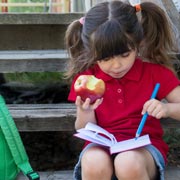 All of the above will really help children to develop the skills and confidence they need to absolutely thrive once they start at primary school. As well as being more able and literate from the moment they start, they’ll more easily be able to follow routines, listen to instructions, and work independently. They’ll absolutely hit the ground running with the existing knowledge, tools and abilities that they learned during their all-important early years. Indeed, those children who receive a high quality early years education have been shown to attain higher grades in their GCSEs and can be the equivalent of a year ahead by the time they reach the age of 15.
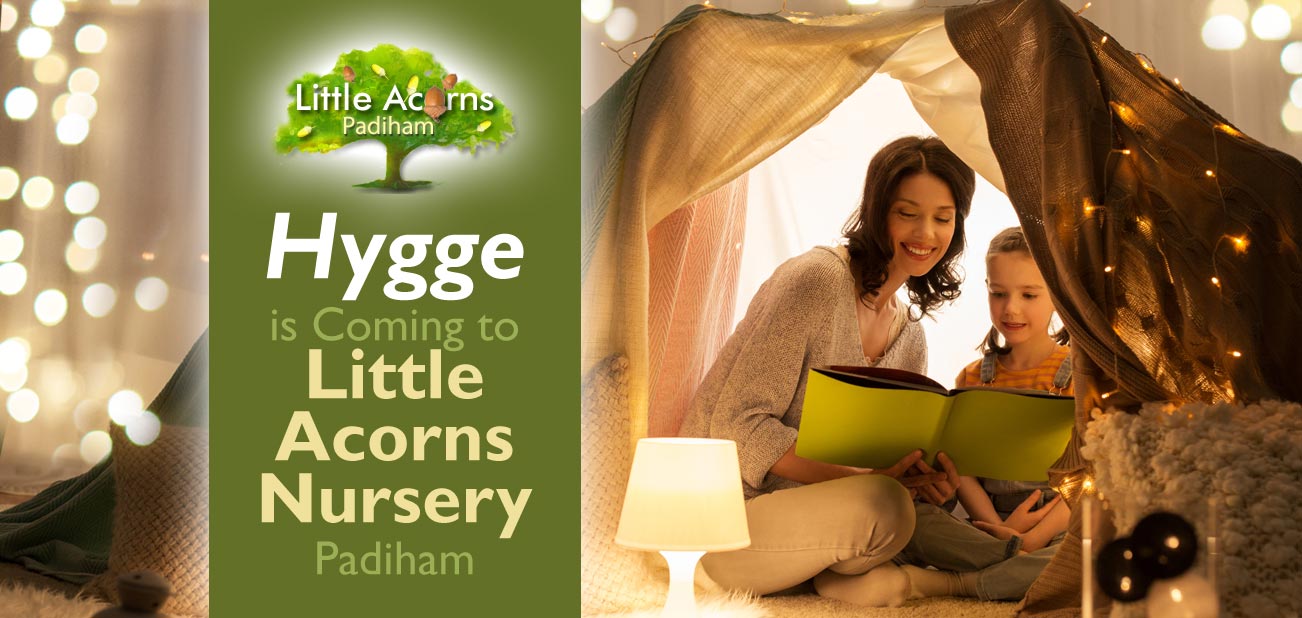
 One of the exciting new initiatives that we have planned for Little Acorns nursery, Padiham, is to make it a Hygge setting. In today’s post, we explain what Hygge means and how it will benefit the setting, especially the children. Once the Hygge initiative has been fully adopted, it will positively transform the whole feel of the nursery and benefit everyone. Introducing Hygge is exciting and the children are going to love it! To be truthful, we can’t wait to get started!
 Counter to the instincts of those whose first language is English, Hygge is pronounced “Hue-Gah” rather than “Hig”. It is popular in Denmark and Norway and is a Danish word that refers to a rather beautiful lifestyle; one of cosiness, homeliness, contentment and comfort. Wellbeing, warmth and conviviality are central to the Hygge approach. Friendliness, a welcoming atmosphere and closer links to nature are key parts of the Hygge way of life too. Having a more simple lifestyle and living far more in the moment are also part and parcel of Hygge. With such facets, Hygge naturally fosters happiness and contentment in everyone that it touches. Indeed, that’s one of the many reasons we can’t wait for both children and staff to start embracing it at Little Acorns Nursery.
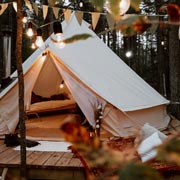 Once we’ve adopted Hygge at the nursery, it’ll look and feel warmer and far more welcoming, with softer, warmer lighting and a more homely atmosphere. Gone will be anything that looks sterile, cold or even harshly lit. Instead, expect to see soft furnishings including cushions, rugs and blankets. Look out for little nooks where children can gather in small groups to read, play or engage with each other or with staff. Hygge nurseries are also synonymous with dens and teepees, allowing children to ‘nest’ in calm, cosy spaces and corners. All these things will also deaden sound, reduce noise levels, and banish echoes, making for a much calmer setting entirely.
 We mentioned that Hygge brings people closer to nature and that will be evident not only outside but indoors too. We’ll ensure there are natural objects and materials for the children to explore and handle, including things like smooth pebbles, wood surfaces, pine cones and perhaps reed and wicker items. These will be lovely to handle and to be around, stimulating multiple senses, which is so important in the young. The introduction of appropriate plants will also
  Children will also be encouraged to be convivial, i.e. be friendly, inclusive, pleasant and welcoming to one another and to staff. We always try to foster a culture of mutual respect and equality, but the introduction of Hygge to the nursery will take this even further. Sharing and politeness are to be encouraged. Play will be calmer and more harmonious. With Hygge, growing friendships will naturally blossom. Hygge minimises conflict and leads to harmony, calmness and a very pleasurable day-to-day experience for everyone touched by it.