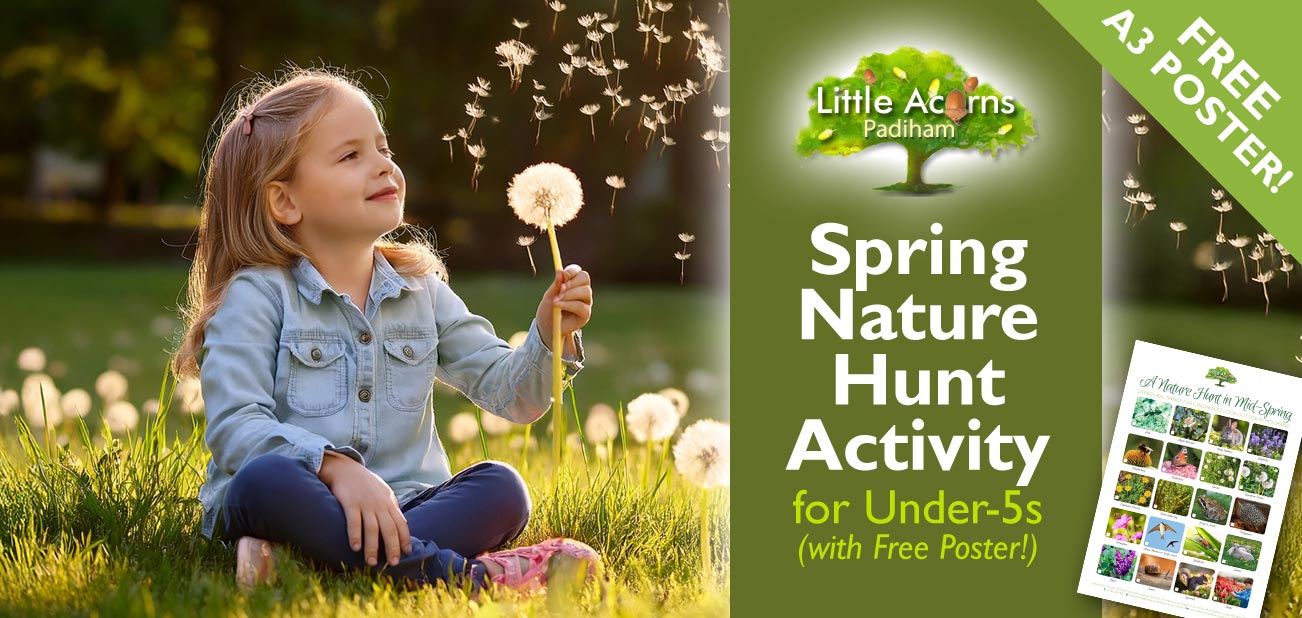
In the height of spring, sunshine lifts our spirits, spring flowers bloom and birds and pollinators suddenly become more abundant. With so much flora and fauna bursting forth and beauty all around, it’s a wonderful time for children to get outdoors to experience nature first-hand. In today’s activity, they can do all of that through a mid-spring nature hunt. We even supply a free poster for little ones to use as reference during the activity! The fresh air will be good for them, they can burn off some energy as they explore the outdoors, and nature will benefit them in a myriad of ways. They’ll discover more about the natural world, nurture their own well-being through close proximity to nature, and learn about some of the natural delights that come with the season.
Can they spot some daisies? How about some bluebells? What about a squirrel leaping through the trees? Has your little one discovered dandelion ‘clocks’ yet? Those are some of childhood’s joys and are irresistible to children of all ages! Snails are beginning to reappear too, and baby snails are an absolute cuteness overload as they carry their tiny homes on their backs. Apple blossom is simply beautiful, and a sure sign of some delicious apples coming later in the year. All these things and more are part of today’s nature-based activity, with reference images hand-picked to coincide perfectly with mid-spring. Download the free poster today, print it out, and head on out to the Great Outdoors with your little ones. The activity will give them a wonderful introduction to some of nature’s magic this springtime. What’s more, spending time close to nature is good for parents too!
Download the Free Reference Poster
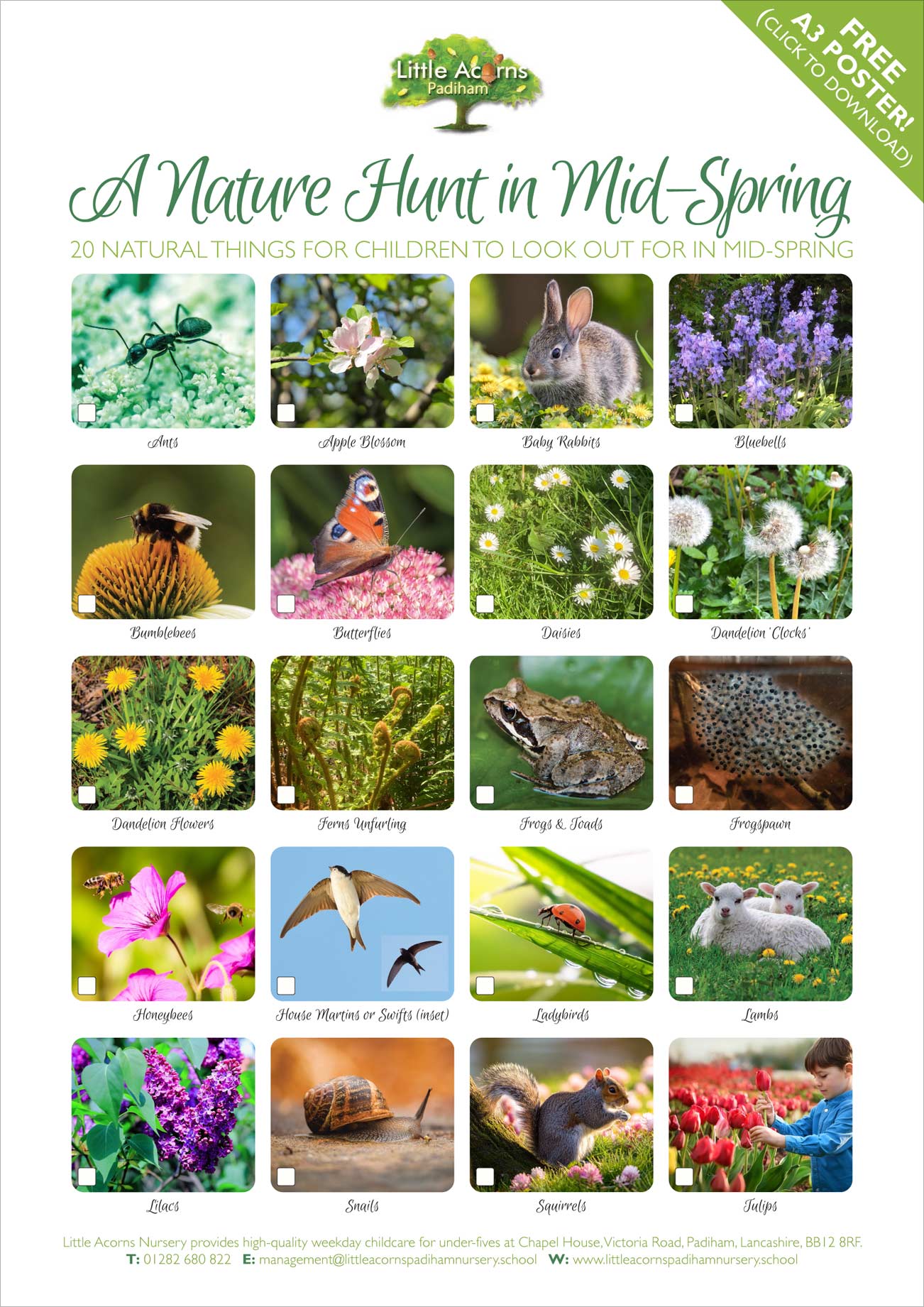
Click the poster preview image to view on screen or download in PDF format (whether you left- or right-click will depend on your browser set-up, so try each if unsure). Posters can be printed as large as A3 (great for displaying on your child’s bedroom wall), reduced to A4, or as small as A5 (perfect as a reference sheet to take on the activity). Parents: don’t forget a pencil, pen or crayon so that each item that your child spots can be ticked on the reference sheet — little tick boxes are provided.
Fun Facts for Mid-Spring
Putting together the nature reference poster got us thinking! Here are some fun and interesting facts that were brought to mind:
 Bluebells also come in pink or white. They’re referred to as pinkbells (also known as pink bluebells and Spanish bluebells) and whitebells (or white bluebells).
- Have you ever noticed that dandelion leaves are like a row of sharp teeth? In fact, the word dandelion is based on the French for ‘teeth of the lion’ — dents du lion.
- Dandelion clocks are known as such due to the childhood pastime that so many of us are familiar with. The theory is that children can tell you the time by the number of puffs it takes to blow all the seeds off into the air. It is, of course, only occasionally accurate!
- Frogspawn is a wonderful way to teach children how some creatures evolve from eggs, through infancy, into adulthood. With frogspawn, they start off as tiny, transparent eggs, then grow a tail that enables them to swim. Later come arms and legs, then they lose their tail and mature into tiny infant frogs. It’s incredibly educational and engaging for children to witness.
- Does your child know about bee nectar baskets? Those are the little yellow leg pouches that can be seen on some bumblebees’ and honeybees’ legs. They are where the bees collect and store their nectar ready to transport back to the hive.
- Teach your child about the importance of pollinators, which include bees, butterflies and hoverflies. Without them, flowers would not be fertilised i.e. pollinated. And without pollination, we’d have no fruit, vegetables, seeds, cereals, legumes and nuts to eat. So, we owe all those cute pollinators enormous thanks!
- An earlier version of our spring reference poster included snowdrops, daffodils, and crocuses. However, by mid-spring, they’re disappearing rapidly because their blooms peaked in very early spring. Meanwhile, bluebells are at their peak by mid-spring (right now at the time of writing), so go in search of them quickly if you don’t want to miss this year’s beautiful crop! If you can find a blanket of flowering bluebells in a wood, take note not only of the visual beauty but also of their gentle scent on the breeze.
 Bluebells also come in pink or white. They’re referred to as pinkbells (also known as pink bluebells and Spanish bluebells) and whitebells (or white bluebells).
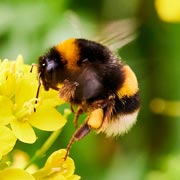 Does your child know about bee nectar baskets? Those are the little yellow leg pouches that can be seen on some bumblebees’ and honeybees’ legs. They are where the bees collect and store their nectar ready to transport back to the hive.
The Benefits of Nature
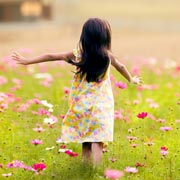 We’ve said before — and we’ll keep on saying — nature is incredibly good for children and adults alike. But what are some of the benefits, and why is nature so important to children? Well, we wrote an article about it and you can read our top 20 reasons why nature benefits children here. To give you an idea, it’s educational, stimulates creativity, is good for both mind and body, promotes deeper thinking, and is a feast for the developing senses. It also encourages empathy, teaches little ones about the circle of life, improves concentration in the classroom, and even helps children improve academic grades. These are just the tip of the iceberg, however, so click the bold link to learn much more about why spending time in and around nature is so beneficial to children.
We hope that children (and parents) have great fun with this seasonal nature-based activity. Feel free to share a link to the post with friends and spread the word about the free poster!
Little Acorns Nursery, Padiham, Lancashire
We offer a first-class weekday childcare service in Padiham, Lancashire
 Little Acorns is a wonderful nursery and preschool in Padiham, Lancashire. Here, children aged up to five get the very best start in life and an early years education that’s tailored to them. It’s all about bringing out the very best in every child at Little Acorns. Our fabulous team of early years practitioners will look after them every day in a wonderful home-from-home environment. We’ll ensure they feel loved and valued and are given every opportunity to absolutely shine, so they’re ‘school ready’ by the time they leave us to start school. We also support free childcare places through the many different government-funded childcare schemes available to eligible families. Get in touch today to learn more, apply for a place, or ask questions. We can’t wait to meet you and your child!
Located in Padiham, the nursery will also suit families living in nearby towns and villages like Hapton, Rose Grove, Burnley, Altham, Huncoat, Read, Simonstone, Sabden, Higham and Wood End.
Safety notice: Supervise children at all times and encourage them to look but not touch when scouting outdoors for the signs of spring. There are many dangers out there including insects that sting, plants that are poisonous, fungi that are toxic — and even snails can pose potential dangers (lungworm).

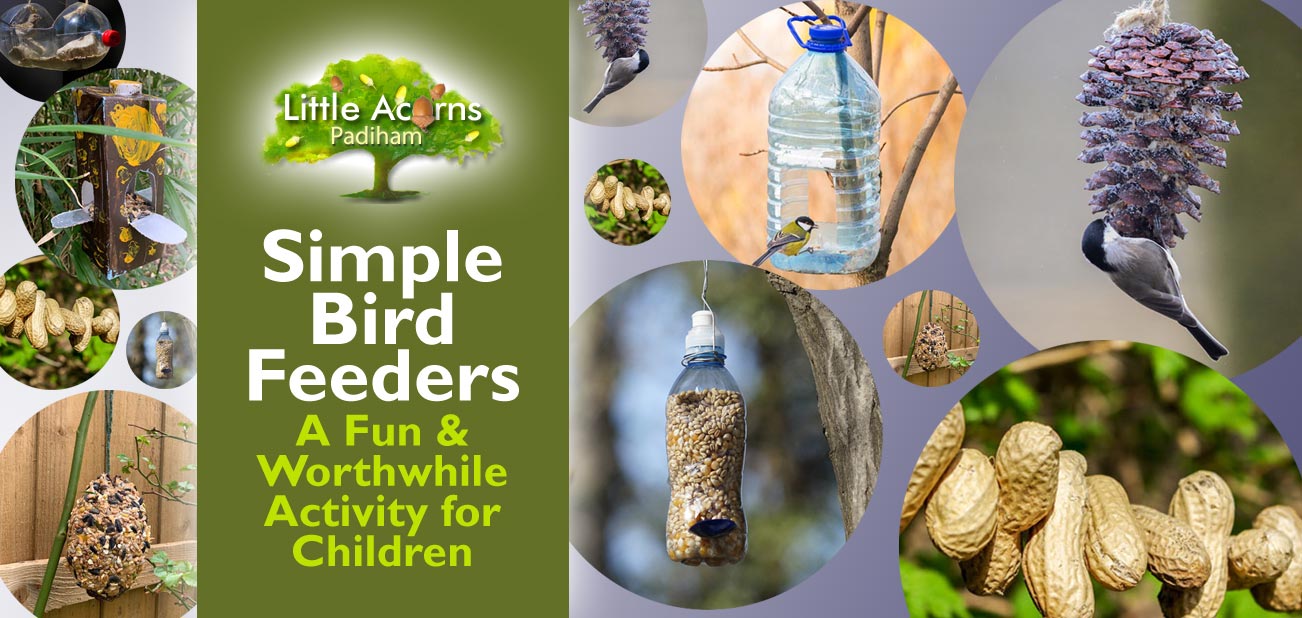
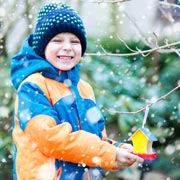 One fantastic way to encourage children to connect with nature from an early age is by making homemade bird feeders. It’s a hugely popular activity amongst children of all ages, so today’s post is all about how to get started with your child. Although bird feeders can be made at any time of the year, the activity is perfectly suited to the winter and early spring. At this time, wild birds like robins, blackbirds, doves, and sparrows are really struggling to find food. And, with World Wildlife Day arriving in the first week of March, it’s very timely. Take a look!
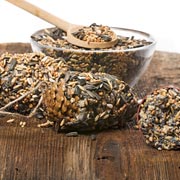 A large, dry pine cone
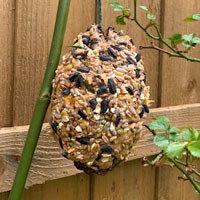 Tie a piece of string securely around the top of the pine cone to create a hanger. Then, let your child spread peanut butter all over the pine cone using a spoon or butter knife. Next, roll the sticky pine cone in a tray of birdseed until it is fully coated. Once completely covered in birdseed, hang it outside on a tree branch or hook and watch as birds come to enjoy their treats!
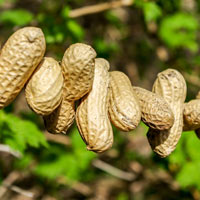 Carefully thread the string through the outer shell of the monkey nuts, tying knots if needed to keep them spaced apart. Once you have a long garland, either tie the ends together to form a loop that can be suspended vertically or attach each end to stretch them horizontally between branches of twigs on a tree or bush. Once birds are used to the new addition to the garden, watch as blue tits, great tits and others enjoy cracking open the shells!
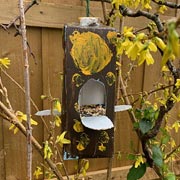 Cut out one or more large holes on the sides of the carton to create openings (adults should do this part for younger children). Thread can be attached at the top – try trapping it under the lid or get an adult to thread it through a hole. Let your child decorate the feeder with paint, stickers, or non-toxic markers. Fill the carton up to the opening(s) with birdseed and hang it up in your garden or balcony.
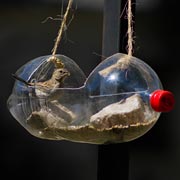 A clean, empty clear plastic water bottle
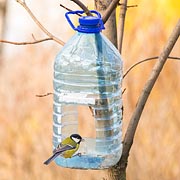 There are a few options for this type of bird feeder, as indicated in the photo examples. Either way, small feeding holes or ‘hatches’ will need to be cut (by a supervising adult) as openings. Optionally, cut small holes on opposite sides of the bottle and insert wooden spoons or sticks through them to create perches. Fill the bottle with birdseed and tie a string to hang it outside. Watch as birds land on the perches and enjoy their treats!
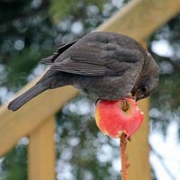 Expose some of an apple’s sides by removing some of the skin. Then, either attach string through (or around) the apple and hang it from a branch outside, or push a stick into it (carefully aimed away from you in case it goes right through) and push the other end into the ground. Watch as birds peck away at the tasty treat! Blackbirds, in particular, love apples!
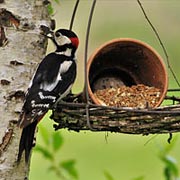 Our personal favourite and key recommendation is sunflower hearts. These are the little kernels inside sunflower seeds and the good news is that by buying them as sunflower ‘hearts’, birds don’t need to remove the shells. Robins, blackbirds, doves, dunnocks, bluetits, great tits and pigeons love them! They’re generally inexpensive, in our experience, and are available widely, including in supermarkets.
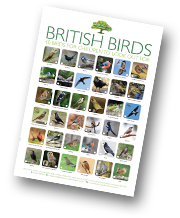 Once your bird feeder is in place, keep an eye out for common garden birds. Typically, birds that are attracted to bird feeders in gardens include robins, bluetits, sparrows, and dunnocks although it does depend on what food you put out for them. Children are also likely to see larger birds like blackbirds, doves, pigeons, magpies and even crows, as they are likely to scavenge underneath for seeds that have dropped from the feeders. To help children identify which birds visit, ensure you have printed out our
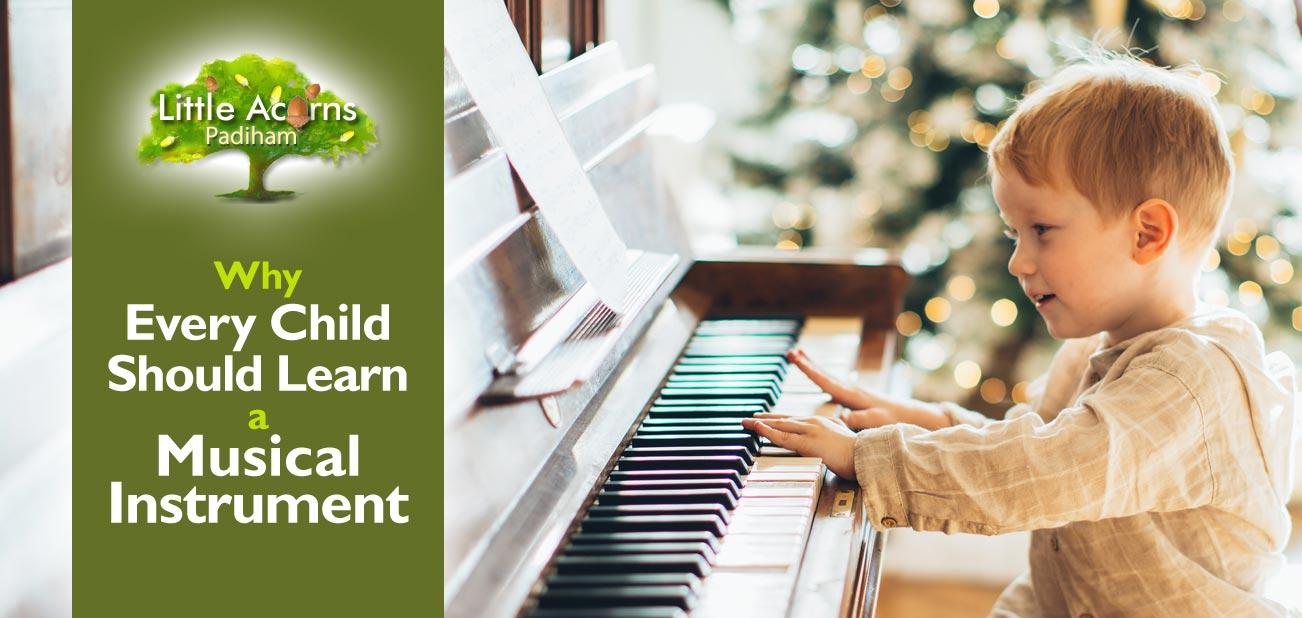
 Even the youngest children seem to have an affinity towards playing a musical instrument. Put any child in front of a piano, guitar, or drum, or hand them a tambourine or shaker and they’ll immediately engage in generating sound and rhythm. It seems to be instinctive and children find music-making almost compelling — and great fun to boot. What’s more, children seem naturally keen to become better at playing instruments and, in time, to be able to play a recognisable tune. With that being the case, it’s often very easy to encourage them to take lessons, whether formally or informally, often leading to a lifelong vocational skill. What many parents may not know, however, is just how beneficial learning to play musical instruments is to little ones. Indeed, learning to play benefits them in often profound ways and that’s what we take a look at in today’s post.
 When children play a musical instrument, learning to read music is a natural progression. Although it is communicated using different symbols, reading music is akin to reading words in a book. There is a flow from one side of the page to the other, every detail needs to be taken into consideration, and the left side of the brain is doing the work. Indeed, the left side of the brain controls reasoning and processes language. Whether reading music or words, each mark means something and communicates something to the reader. As such, children who learn to read music and do so regularly may find that it also helps them to read words in books.
 Learning to play a musical instrument and read music requires thought, deep concentration, and analysis. All such activity is great exercise for a child’s developing brain. It gets synapses firing, helps in the development of new connections, and truly enhances cognitive development. It’s rather like a multi-gym for the brain!
 When children learn to play a musical instrument, collaboration is a natural next step. Whether joining a band, writing songs as part of a team, or playing in the school orchestra, such collaboration is a fabulous way for children to make new friends and acquaintances. Through making music, their friendship circles will naturally grow and that’s a wonderful benefit.
 Music is almost magical in its ability to set moods. It can bring calm and reduce stress, for example. It can make us – and children – more meditative and reflective, more energetic and ‘pumped’, and anything in between. It can and often does lift our spirits too. It’s a wonderful way for children to experience and even change emotions and, when chosen appropriately, is good for their well-being.
 Even the youngest of children will take pleasure from shaking a homemade shaker, beating a box or drum, or jangling a tambourine. Such things are great starting points to introduce little ones to musical instruments. They can later progress to more advanced instruments like ocarinas, recorders, keyboards, guitars and so on.
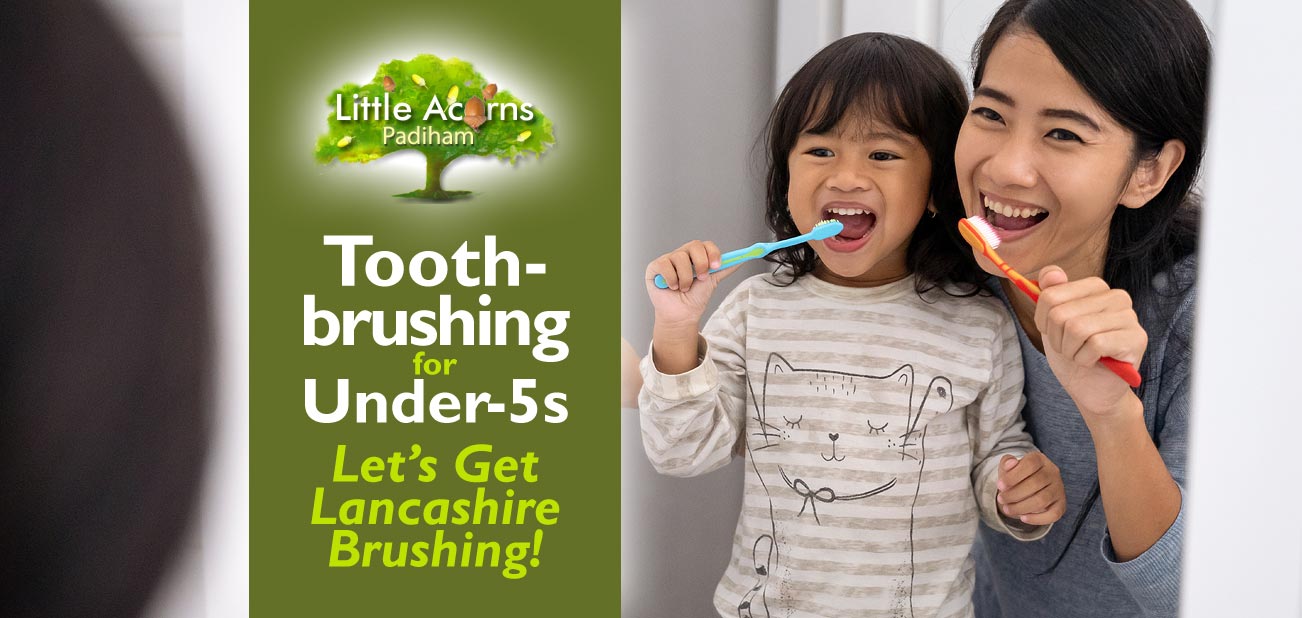
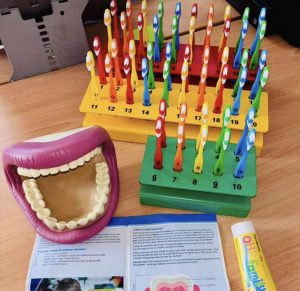
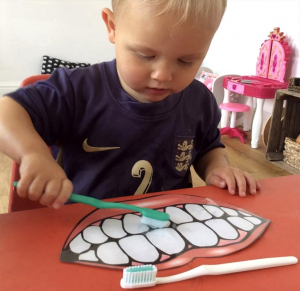
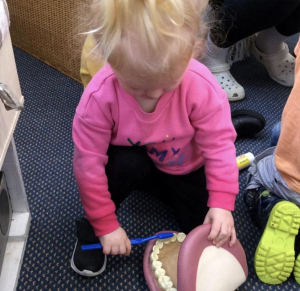
 Today we bring you a guide to toothbrushing for under-fives, inspired by children at Little Acorns Nursery taking part in Lancashire’s Let’s Get Lancashire Brushing campaign. An initiative of Lancashire County Council Public Health, the programme is designed to educate and encourage young children, including toddlers, to brush teeth for 2 minutes twice a day using age-appropriate toothpaste. What’s more, their message is that it’s never too young to begin and can even start before the first tooth has surfaced. At Little Acorns Nursery, the programme is supervised by staff and is intended to take place in tandem with toothbrushing at home — it does not replace it. Nursery staff guide children to establish a positive and proactive routine around toothbrushing, to foster good habits around oral hygiene, and thereby minimise tooth decay and problems associated with it.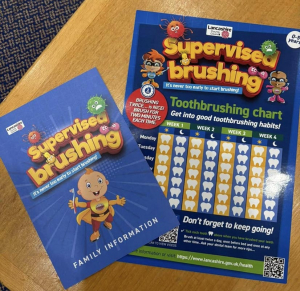

 Primary school applications need to be submitted while the child is three or, at the very latest, has very recently had their fourth birthday. Because applications received on time are processed first, failure to apply by the due date means a child is less likely to receive an offer for their preferred school — places may no longer be available that late in the day.
 Choosing a primary school for a child is an important step for any family. Somewhere conveniently close makes sense — and indeed is one of the most important criteria for offers, as we’ll see later. After all, you don’t want to be late dropping off or picking up your child because you’re stuck in a traffic jam miles away. Somewhere local will also mean your child has friends who are conveniently close by, which is another good thing. And, of course, if your child’s sibling already attends, then that school would usually be a natural first choice, assuming you’re happy with it of course.
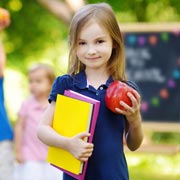 While the eligibility criteria for school places are not identical for all locations, there are several factors that are fairly standard. For example, schools closest to a child and those where a sibling already attends are usually favoured. Children may also be more likely to be accepted at a school where a parent has worked for 2 or more years. Church/faith schools are often also more likely to accept children who share the same faith.
  Primary school offers are first sent, by email, to those who applied on time and included a valid email address on their forms. Offers to such families are released on the morning of the 16th of April or the next working day if that happens to fall on a weekend or public holiday. Others who supplied an email address on their application, but who applied late in respect of the 15 January deadline, will usually receive offers via email the same day, although later on. Others, without an email address specified on applications, will receive offers via Second Class post, so are likely to see offers later than the 16th of April. Some local authorities, however, allow people to log onto a portal to view offers from that date. Note that those applying ‘in-year’ receive offers on different dates to the standard ones specified above.
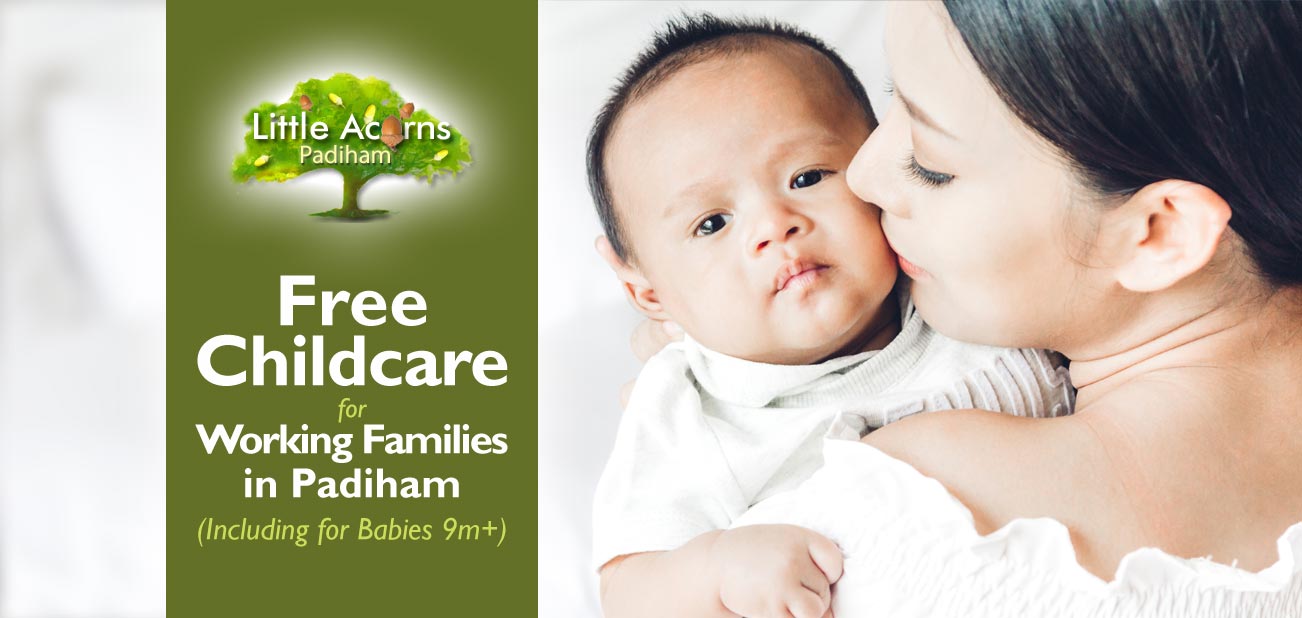
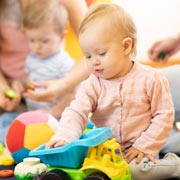 Today, we remind Padiham families that Little Acorns Nursery supports the new — free — childcare scheme for eligible children including babies as young as just 9 months of age. Although it’s available only to eligible working families, the bar to entry is fairly low. The childcare funding is therefore attainable for many families. This free childcare is not just limited to babies either and, what’s more, it’s due to become even more generous from September 2025. In our guide below we’ll outline who is eligible, how much childcare funding they can access, how many childcare hours that equates to, and what the eligibility criteria are. If you’re the parent of a baby, toddler, or child up to three years old, this is for you.
 For those working families who are eligible, the scheme provides 570 hours per year of free childcare to children aged from 9 months to 3 years. This is normally taken as 15 hours per week for 38 weeks, usually aligning with the standard educational term-time weeks for school timetables. That said, it may be possible to stretch the hours over more weeks of the year if your childcare provider is able to accommodate such flexibility.
 We’ll try to simplify the eligibility criteria for you. Whether it’s for a baby aged 9 months, a toddler of 1 or 2, or a child aged 3 or 4, there are essentially four main criteria for this specific type of childcare funding:
 Well, it’s good news. It’s already the case that all 3 and 4-year-olds living in England are eligible to receive 570 hours (15 per week) of free childcare anyway. That’s available under what’s known as ‘Universal Entitlement’, a Government childcare funding scheme that’s been around for some time. What’s more, those working families that are eligible for the ‘new’ free childcare for children aged 9 months to 3 years are also likely to be eligible for a top-up of their child’s Universal Entitlement once they reach the ages of 3 and 4. In those cases, they’ll be entitled to 30 hours per week over 38 weeks (or however the 1140 free hours are spread out). That’s because the eligibility criteria are the same (see section above).
 Let’s get ready for some fun Halloween activities for our under-5s — as well as for older children. Children of all ages are naturally drawn to the unique imagery, fun activities, and spookiness of Halloween.
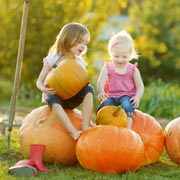 A simple but fun activity for children in the run-up to Halloween is to pick pumpkins. Whether it’s simply a case of visiting a local garden centre or store to choose a pumpkin from a themed display, or visiting a local farm where children can search for a favourite pumpkin in fields laden with them, it’s great fun for little ones. Children are sure to enjoy choosing from the usually huge array of different sizes and shapes.
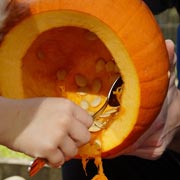 Once your child has a pumpkin or other gourd, it’s almost imperative that it’s carved (by a supervising adult) and made into what Americans call a Jack-O’-Lantern. Many families will be totally familiar with these, typically being a hollowed-out pumpkin with eyes, a nose, and a mouth — or indeed other kinds of design as indicated in the accompanying image. Children can be involved in the design, painting with paint if going that route, and perhaps spooning out the inside flesh (keep for later; see the food and drink section below).
  However, any cutting will be too dangerous for little ones, so should be done only by an adult. It’s the same with the next step, which is lighting a candle or tea light to put inside once it’s dark. The pumpkin lanterns can then be placed outdoors for neighbours and friends to see and the children themselves will find these fascinating once night falls. They make for a great atmosphere and a bit of spookiness!
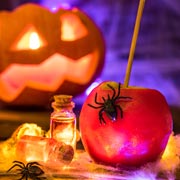 Children will also love spreading the Halloween theme around the house. This activity is made easy by purchasing inexpensive Halloween decorations that are available commercially in places like supermarkets each October. Whether it’s cotton spider webs, complete with pretend black spiders, that can be strung from picture frames, furniture or across ornaments, little LED strung lanterns that have a Halloween theme, or glow-in-the-dark plastic skulls, ghosts, or pumpkins, there are a myriad of fun decorations that children can use to theme bedrooms and living rooms. It all makes for a very spooky and fun atmosphere come Halloween.
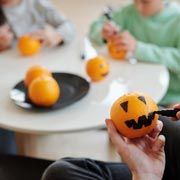 It’s also possible for children and families to create their own Halloween-themed decorations, with a bit of imagination. Stretched-out cotton wool can mimic spiders’ webs, for example. Children can get creative and make cut-out (with adult help for the youngest) spiders, bats, and suchlike to put on and around such webs. Children can paint oranges with faces to represent mini pumpkin Jack-O’-Lanterns, or even string these together into themed garlands. They can get involved in making Halloween-themed decorated biscuits or cookies too, which we’ll come to next.
 Parents/carers can help children make, or simply decorate, Halloween-themed biscuits. See the photo to get an idea of how they can be baked and painted to represent wonderful ghosts, spider webs, bats and more. These are attractive as well as being great fun for little ones to get involved with, under supervision. What’s more, they can be eaten and are often delicious!
 One of children’s favourite Halloween activities is dressing up. Children, including those under five, love to put on themed costumes to become a ghost, witch, wizard, spider, skeleton or character from a film like Harry Potter. Even better is when their friends, neighbours or siblings join in and they can each compare outfits and get into character. “Boo!” they may shout, or perhaps they’ll cast pretend spells and ‘fly’ on makeshift broomsticks. It’s all great fun!
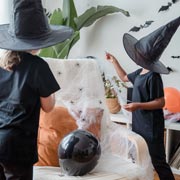 Outfits can be purchased, often inexpensively, online or through supermarkets when Halloween is approaching. Alternatively, children can get creative and make their own. A white sheet with suitable holes cut for eyes is perfect for a ghost outfit. Black material or capes are a great start for a witch or wizard outfit and pointy hats can be made, perhaps with a bit of help from adults, from cardboard and then painted black or covered with black tissue paper. Any number of different outfits can be made, in fact, and all that’s needed is imagination, the right materials, and a bit of time. Children’s creativity will be stimulated and they’ll get a great feeling of accomplishment once the fancy dress outfits are complete.
 All of the above activities can be combined when children throw a Halloween party for friends and/or neighbours. It’s all the more fun when other children come along in their own themed outfits. Together, children can play games, get into character, listen to spooky music, eat homemade Halloween-themed food and drinks, and have a wonderful time. Not only are parties fun but they also deepen bonds and help little children strengthen social skills. It’s all hugely creative too.
 Part of the party could involve, perhaps, a ‘trick or treat’ session around the neighbourhood — under close supervision of one or more adults, of course. Children get great glee from this tradition, which often results in the bonus of lots of goodies to take home and sweets to eat (… and it’s only once a year) or perhaps a light-hearted, though often hilarious ‘scare’, should a neighbour decide to go with the ‘trick’ option.
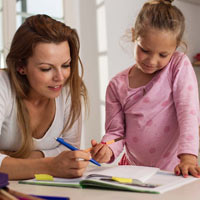 Parental involvement in a child’s education can take several forms. Note, however, that the benefits are most positive when parents engage right from the early years, beginning in children’s nursery and preschool years. The examples below show the kinds of parental involvement that will enhance children’s lives:
 Applying that information in the form of help and support while the child is at home. Referring to the right textbooks, helping with homework, and helping the child understand any tricky topics are typical examples of areas where parents can help children at home.
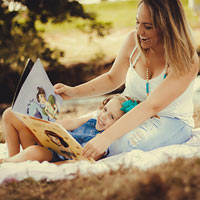 When children do well, praising them will encourage them to keep up the good work. It’ll give them a greater sense of achievement, and some moral support, and help instil a love for learning in them.
 Let’s now look at some of the benefits that children can expect to enjoy when parents are closely involved in their education.
 The benefits of parental involvement in education to children are numerous, though, also including the lowering of stress levels and improved knowledge, skills, outlook and outcomes. The deep and reliable source of support, together with all the other benefits, also combine to make children feel happier, have a higher quality of life, be less likely to skip lessons, be well-behaved, and have closer bonds with both parents and childcare/education staff.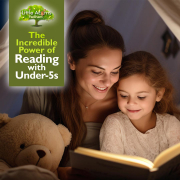
 Parents and caregivers have a simple yet incredibly powerful tool at their disposal to significantly boost the education of children under five: reading with them. In study after study, this simple activity has been shown to transform a child’s early years of education, giving children short-, medium-, and long-term benefits that even extend into adulthood. With that in mind, we take a look today at the many benefits and incredible power of reading with children, especially those under five.
 When you read to them, the cognitive benefits to children are profound and this is backed-up by findings from multiple studies. The benefits include improved memory, problem-solving, logical thinking, and memory skills. Even children’s attention spans are seen to improve when parents regularly read with them.
 One of the biggest winners when reading with children is the boost to their language skills. Indeed, a 4-decade study (
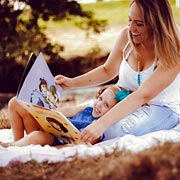 If children are to get the most from reading, it’s important to read with them. That’s all about making it interactive, engaging and fun to ensure children are involved. There are a number of ways to accomplish this and doing so will be the key to them gaining the most benefit from the activity.