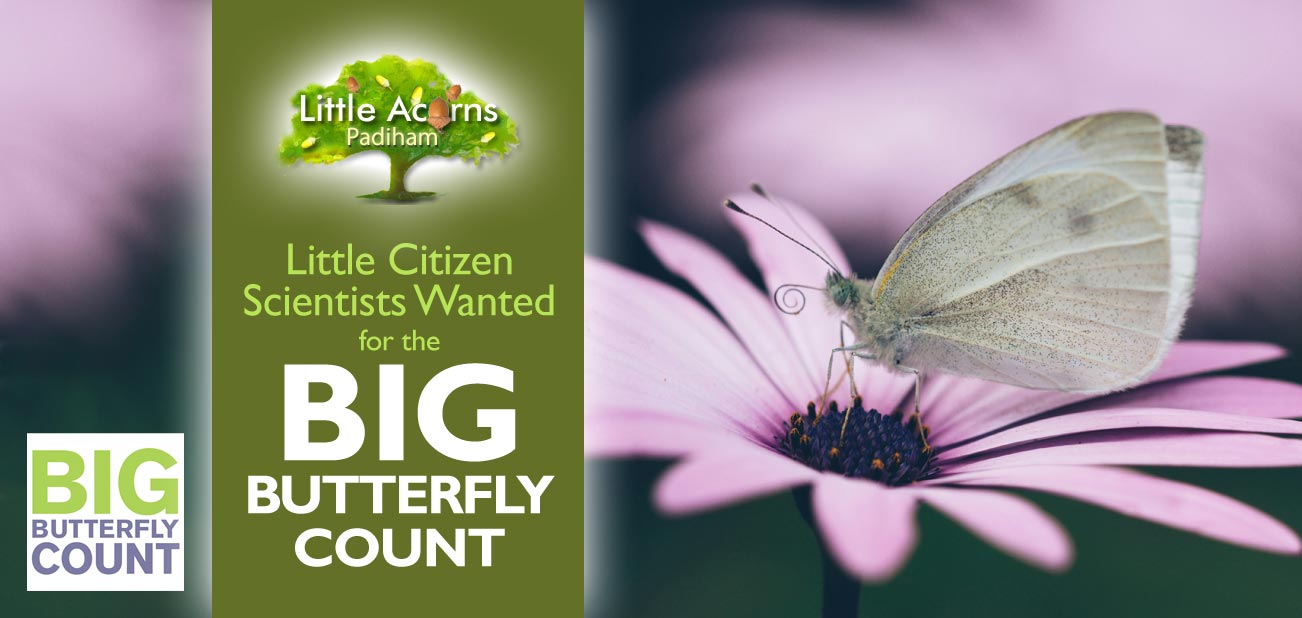
 Calling all little citizen scientists — we need your help — and parents too! During part of July and early August the Big Butterfly Count takes place across the UK and the more children and families that take part, the better. All it needs to take is 15 minutes and taking part will help butterflies, daytime-flying moths and the conservation of nature and biodiversity in general. What’s more, it’s a free, enjoyable, educational, and hugely worthwhile activity for children and families to take part in. In today’s post, we’ll tell you everything you need to know in order to take part in 2024’s Big Butterfly Count. Little citizen scientists: get ready!
The Big Butterfly Count 2024
Starts: Friday 12th July
Ends: Sunday 4th August
What is the Big Butterfly Count All About?
The Big Butterfly Count is the world’s largest survey of butterflies. It takes place in Britain each year during the period when adult butterflies and daytime-flying moths are at their most prolific and active. These wonderful creatures are sadly threatened, with UK populations of many having plummeted over the last few decades.
“Right now, butterflies and moths are sending an SOS” (Butterfly Conservation)
The giant ‘citizen’ survey therefore aims to keep tabs on populations of particular species each year so that any changes in their numbers can be identified and any adverse issues affecting them identified. Only then can appropriate conservation measures be implemented to help them recover.
In addition, because butterflies and daytime-flying moths suffer from the same threats as other pollinators and wildlife (climate change, use of indiscriminate pesticides, habitat loss, etc.), trends in their populations can be used as a barometer for the state of wildlife, biodiversity, and nature in general.
So, if you and your little one(s) would like to take part and become citizen scientists, read on and we’ll explain the easy process of taking part.
“One of the great things about the Big Butterfly Count is that anyone can play their part, whether young or old.”
What You’ll Need
 You’ll need a tiny bit of preparation, but it’s quick, free, and easy…
Either:
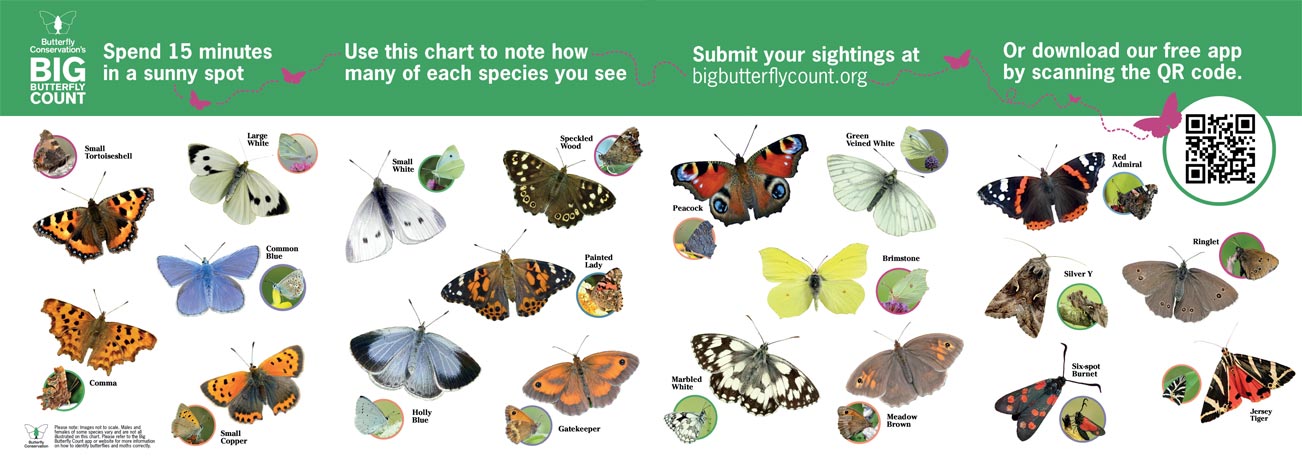
- Download and print out the free butterfly reference sheet — here’s the butterfly ID chart for England (alternative charts are available for other languages and UK areas);
or:
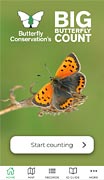
- For families with smartphones or tablets, download and use the Big Butterfly Count app — it’s free and also includes instructions and all the identification charts, links, and useful information you or your child will need to complete the task.


Choose a Location for your Butterfly Count
Before commencing your own butterfly count, you’ll need to identify a suitable location in which to do so. That could be your garden, local park, somewhere in the countryside, or simply somewhere like a hedgerow. Wherever it is, it will need to have flowers in bloom in order to attract butterflies and/or daytime-flying moths. And, of course, it needs to be safe, with any little ones having suitable adult supervision.
The Best Places to Spot Butterflies
You/your little one will want the best chance of spotting butterflies during the Big Butterfly Count. With that in mind, the following types of locations are likely to have the greatest potential for success:
- Places where there are lots of flowers, blooms, or wildflowers;
- A sunny location that’s also sheltered from the wind;
- Flower meadows and anywhere with brambles;
- Clearings in forests where wildflowers are growing;
- Areas with long grass if they contain wildflowers;
- Hedgerows that contain wildflowers;
- Glades or forest clearings where a wide variety of trees and plants can be found at different developmental stages;
- The middle of the day is often a great time to see butterflies.
How to Do Your Butterfly Count
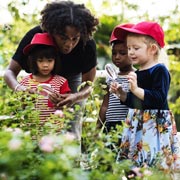 Once you’ve chosen a suitable location that has flowers blooming and is ideally sunny and sheltered, you are ready to count butterflies and submit them to the Big Butterfly Count survey.
Over the course of 15 minutes, count the butterflies (and daytime-flying moths) that are included on the ID chart or smartphone app (only about 21 of the possible 60+ species are targeted in the Big Butterfly Count*). You/your child can log your sightings either directly in the app or by marking them on your butterfly ID printout. Don’t worry if you don’t see any at all within the 15-minute window — that counts in the survey too.
* If you/your child would like to identify and log butterfly and moth species not included in the Big Butterfly Count, you can do so using an alternative smartphone app, iRecord Butterflies, which you can use any time of year.
You can either stay in one spot or walk while counting during your 15-minute slot. You can do as many 15-minute surveys as you like within the survey dates. Each can be submitted as a separate survey, along with the date and location for each.Tips!
See the Results!
Once you and your child have counted and submitted your results, you are officially Citizen Scientists! Well done! We hope it was fun and interesting as well as being a good thing to do to help the adorable butterflies, moths, and conservation of the natural world itself.
If you’re wondering what the results of the thousands of citizen scientist surveys across the UK are, you can check these out on this interactive map or the equivalent map available through the Big Butterfly Count smartphone app. You will have to wait until the results are available, i.e. for 2024 this will be from the 5th of August. Once available, you’ll be able to see counts and details of what was spotted in all areas of the UK. Try zooming in on your own area, which will include your own survey(s) within the data presented.
Other Ways Children Can Help Butterflies
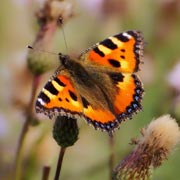 In addition to taking part in the Big Butterfly Count, children and families can help butterflies in other simple ways too. What’s more, they’re also fun, educational, and make the world a better place. Additional ways to help butterflies – and other pollinators – include:
- Sowing wildflowers in gardens and outdoor spaces;
- Making gardens and outdoor spaces more wildlife-friendly;
- Putting out pieces of overripe fruit (apples, oranges, bananas) and shallow dishes of water for them to sip at;
- Refraining from using harmful chemicals in gardens (e.g. pesticides, weedkillers, slug and snail killer, etc.);
- Keeping gardens ‘natural’ — e.g. avoiding replacing lawns with fake grass, mowing too often, or paving over areas that can be kept natural.
Nature & Little Acorns Nursery, Padiham
 Little Acorns Nursery in Padiham is perfectly located for children’s involvement in the Big Butterfly Count and for being close to nature. That’s important, because nature is incredibly beneficial to children — and adults, of course. Nearby are parks, hills, waterways and the gorgeous Lancashire countryside. And, at our Padiham nursery itself, we have a lovely garden with a wild zone for children to explore. These areas allow children to get close to nature in a safe, supervised, environment. They also support the nursery’s tailored curriculum including any specific areas of interest for children under our care.
Consider a nursery place for your child at Little Acorns Nursery in Padiham today. Here, they will get the very best start in a nurturing, homely environment where we will bring out the very best in them. Choose an option to get started:
Our location in Padiham, Lancashire, means that our nursery is also near Hapton, Rose Grove, Burnley, Altham, Huncoat, Read, Simonstone, Sabden, Higham and Wood End.
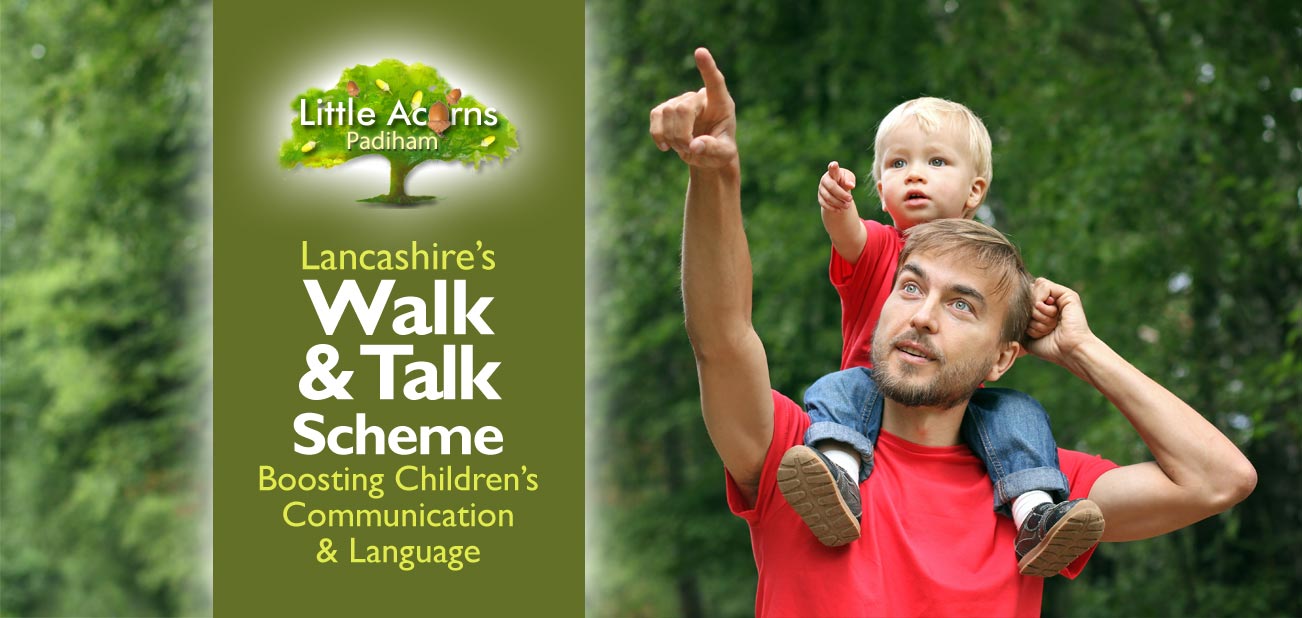
 Lancashire’s Walk & Talk Initiative is a scheme that’s wholeheartedly supported by the childcare practitioners at Little Acorns Nursery in Padiham. We encourage all Lancashire parents to take part too. It’s an initiative that is incredibly simple but has far-reaching benefits for children in their early years. Let’s take a look today at what Walk & Talk is all about, what its aims are, the benefits to children, and how families can get involved.
 a reduction in the ‘word gap’ — helping children learn new words and widen vocabulary;
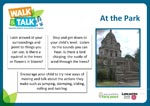
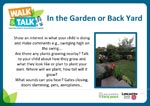
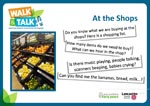
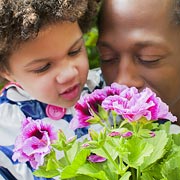 The scheme also aims to encourage children to use a variety of senses. These include, for example, sight, smell, touch, taste, hearing and, of course, active listening. When out on walks there are so many different things for children’s senses to be stimulated by and each lends itself to a conversation. Whether it’s the sound of birdsong, the feeling of the wind on their faces, the smell of freshly-cut grass on the breeze, the noise of traffic, the dazzlingly beautiful colours of blossom, or the mouth-watering smell of food cooking around the neighbourhood or town, walking is indeed a feast for the senses.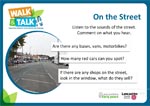


 Pyjamarama is a one-day fundraising event that’s organised through the children’s reading charity BookTrust. It takes place each year across a variety of UK settings including homes, schools, preschools, nurseries and more. As well as being great fun for those organising and taking part, the initiative is beneficial to millions of disadvantaged children. The ultimate aim is to raise money to fund the purchase of books and resources, so that every child in the UK gets the chance for bedtime stories and each family has proper reading opportunities. The initiative is hugely popular, great fun, and transforms lives. Today, we take a look at what to expect, how to get involved, and the many benefits of Pyjamarama.
 Pyjamarama is always a fun day for both adults and children. The added aspect of pyjamas makes it special, quirky and relaxed. And, at the end of the day, it’s incredibly worthwhile. Not only does it raise money to give disadvantaged children and their families opportunities for reading and bedtime stories, but it also encourages those children taking part in Pyjamarama to read more, for pleasure as much as anything. Additionally, it gives children a different perspective and encourages altruism and empathy for others less fortunate than themselves.
 One of the many reasons we love nature and nature-based children’s activities here at Little Acorns Nursery is that nature is incredibly beneficial to children. What’s more, the benefits start right from their earliest years and are profoundly powerful to little ones. There have been many studies about this over the years and they all seem to conclude that nature is incredibly good for us all, especially so during the early years. Today’s post looks at 20 of the key benefits that spending time in and around nature holds for children and, with Spring now upon us, it’s the perfect time to begin getting little ones outside more, weather permitting.
 Spending time in and around nature means children are more likely to be active, for example, walking, running, skipping, climbing, playing, making, or simply building a den. Such activities will not only help them hone fine and gross motor skills, but will also improve coordination, balance, and fitness. Those skills will help them day-to-day while expending energy in this way will help them maintain a healthy weight and body-mass index.
 One of the more obvious benefits of nature is that it gives children a huge sense of freedom that they might not otherwise experience. Being in The Great Outdoors allows children, under appropriate supervision, to run, explore, and play in ways that are far more free than in any other situation. This will also give them a huge sense of natural joy.
 The stimulation of the senses is never more important than during children’s early years and spending time in nature is the perfect vehicle through which to do so. With so many colours, sounds, smells, textures and even (under adult supervision) tastes available in the natural world, it is indeed a feast for children’s senses. Through the senses, children will learn more about the world and generate millions of new connections in their developing brains. It’s almost magical!
 Being around nature regularly can also help children lean naturally towards environmental issues, learn about the problems and become part of the solution. An appreciation of nature is indeed the first step towards becoming environmentally conscious and proactive. That’s a great thing for the planet, particularly as today’s children will become tomorrow’s custodians of the Earth.
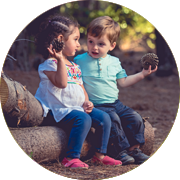 Children generally team up with friends when they’re playing and exploring outdoors. Spending time playing together in natural environments fosters many different kinds of interaction. This can boost confidence, language, communication and social skills. Stronger bonds and a deeper understanding of peers are likely to form from this.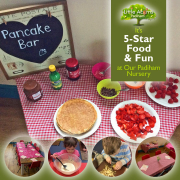
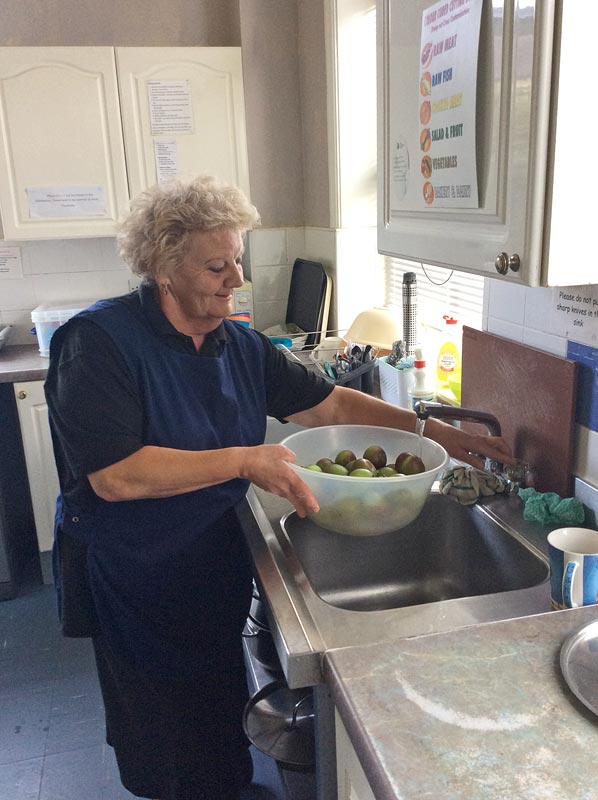
 Our Padiham nursery had its annual inspection by the local Environmental Health Officer recently. The purpose was to ensure, as required in all settings serving food, that Little Acorns Nursery has high standards of hygiene and follows the food preparation guidelines specified by the UK’s Food Standards Agency. Once again, Little Acorns Nursery passed with flying colours, achieving a full 5-star rating. That’s the best rating possible and reflects the highest levels of quality for food preparation, the food itself, cleanliness, and competence of staff. So, our thanks and utmost respect go to Kim, our in-house chef/cook, whose high standards, skill and expertise do the children and the nursery proud.
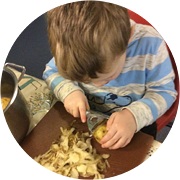 Because the recipe heavily involved potatoes, this also tied in nicely with the book Supertato, which our preschoolers have been looking at in tandem with discussions about food and the importance of a healthy diet. The photo shows one of the children peeling potatoes. Others peeled vegetables and even made their own dumplings. The fun activity helped to nurture children’s learning and the development of new skills and knowledge. The final result was both tasty and a huge hit with the little ones!
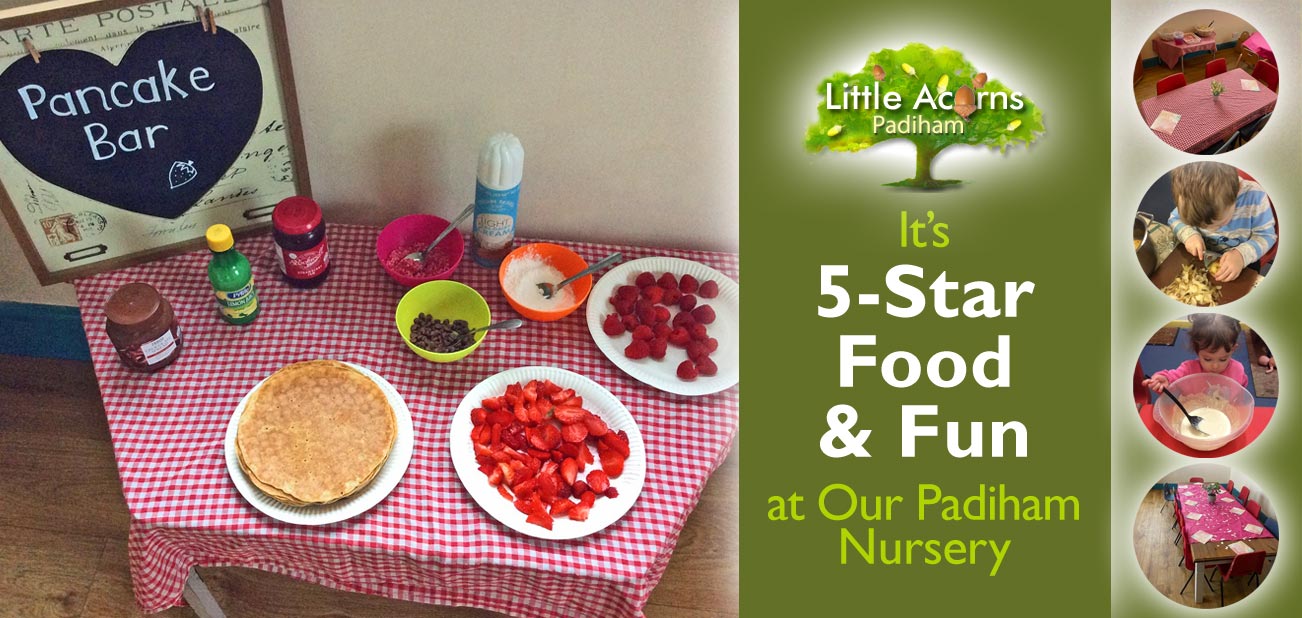
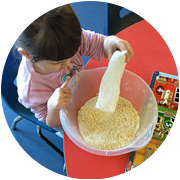 Shrove Tuesday, a.k.a. Pancake Day, arrived on the 13th of February and it gave us a great opportunity to organise pancake-themed activities for the nursery/preschool children … for the entire week! After all, who doesn’t love pancakes? So, as you’ve no doubt guessed by now, our Recipe of the Month for February was home-made pancakes and it’s a recipe the children really enjoyed getting involved in. They loved mixing ingredients in a bowl to make their own pancake mix. We even set up a ‘Pancake Bar’ (see the main photo at the top), which included lots of yummy toppings that children could use to decorate their pancakes. The toppings included strawberries, bananas, chocolate spread, jam, lemon, sprinkles, honey and cream.
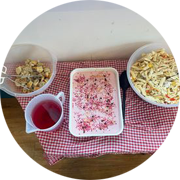 Valentine’s Day, which arrived on the 14th of February, also involved lots of food. After all, as the saying goes, it is often thought of as the language of love! At the nursery, we organised a lovely Grab ‘n’ Go Breakfast for our parents. This was followed by a special 3-course Valentine’s Day meal for our children in our lovely new dining room, which was set up like a little restaurant (see the photos). Children had sausage rolls to start, cheesy chicken and red pepper pasta for the main course and strawberry mousse – with sprinkles – for pudding. Accompanying this was some delicious blackcurrant juice. It all went down a treat with our nursery children, as did several other activities that were themed towards Valentine’s Day.
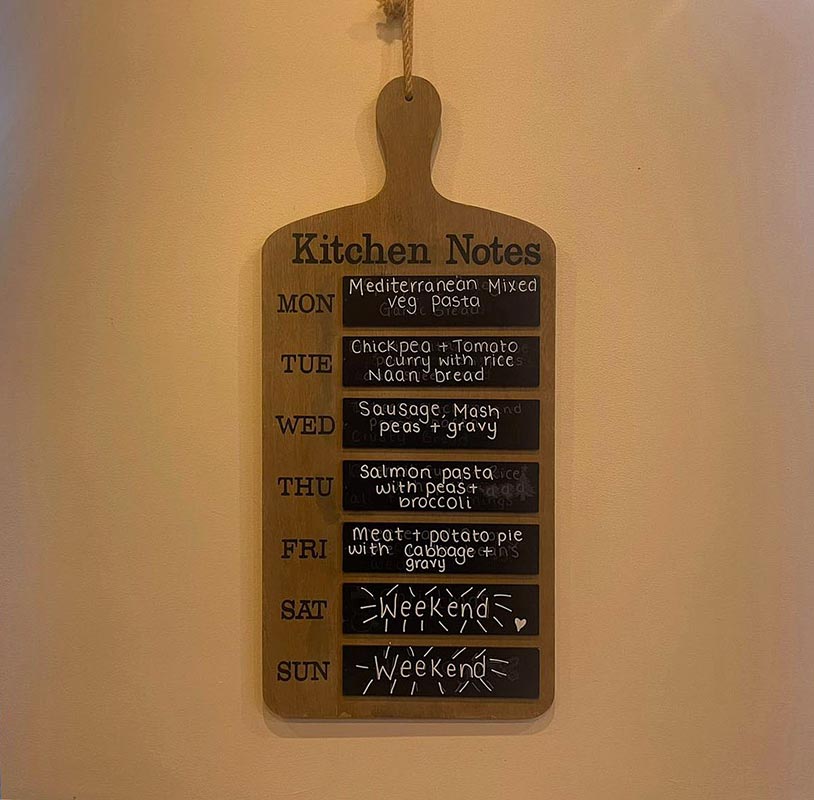
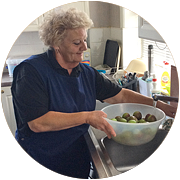 Kim, our talented in-house chef, prepares tasty home-made meals and healthy snacks for children at the nursery. Meals are prepared freshly, on site, using high-quality ingredients, which are locally sourced whenever possible. They are delicious as well as being nutritionally balanced to include a healthy mix of fish, meat, pulses and vegetables.
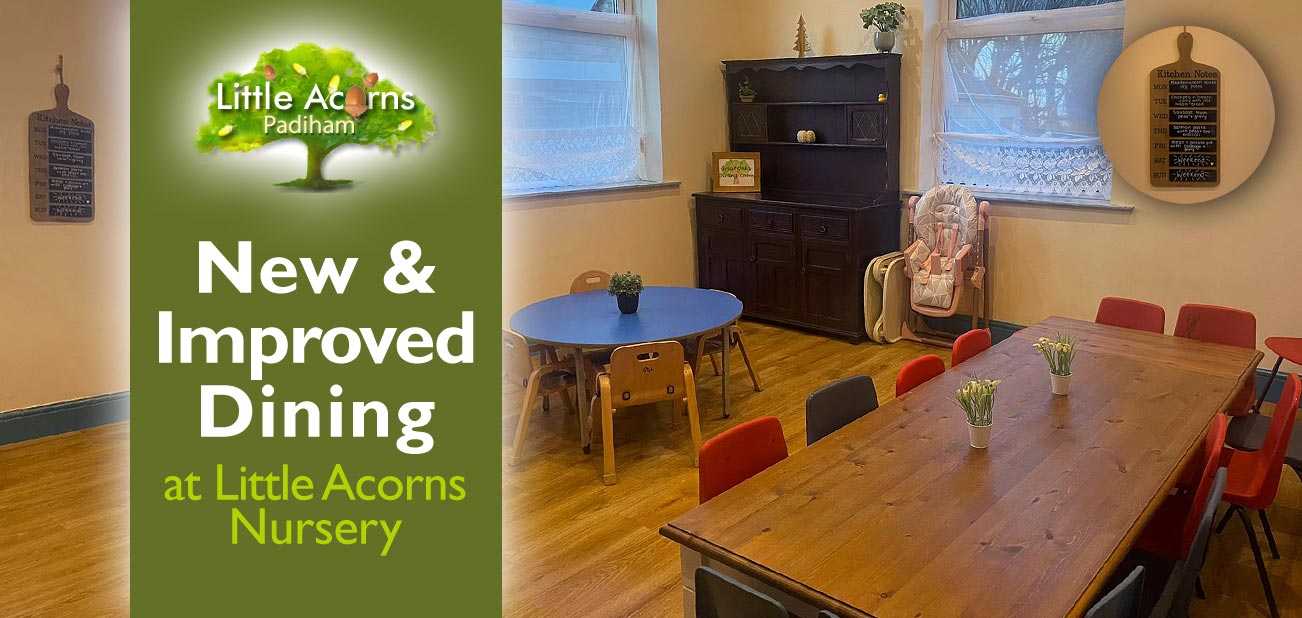
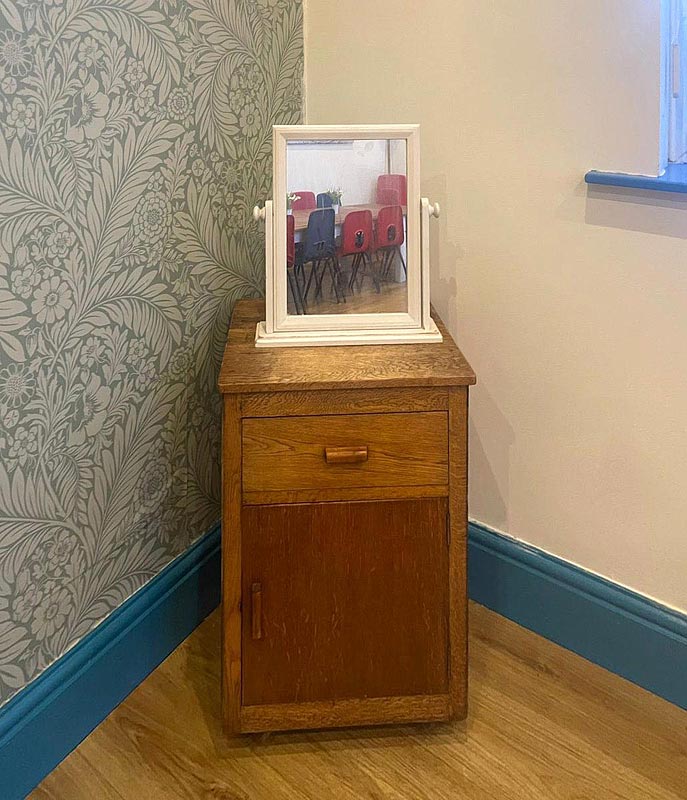
 To make way for the new children’s dining room, an existing room at the setting was repurposed and totally revamped. Starting in Summer 2023, the contents of the existing room were sorted and relocated where needed, leaving a wonderful new space to use as the new ‘Great Oaks’ dining room. Walls, ceilings and skirting boards were prepared and freshened up with new paint. Attractive William Morris-style wallpaper was also hung on a ‘feature’ wall. Large canvas wall images were displayed to form interesting focal points and storage was added in the form of a large cabinet and a small cupboard. Large and small dining room tables and chairs were added for the different age groups along with high chairs, which will be close at hand whenever needed. All this sits on a durable floor with an attractive wood finish. All in all, the outcome is a pleasant home-from-home for children.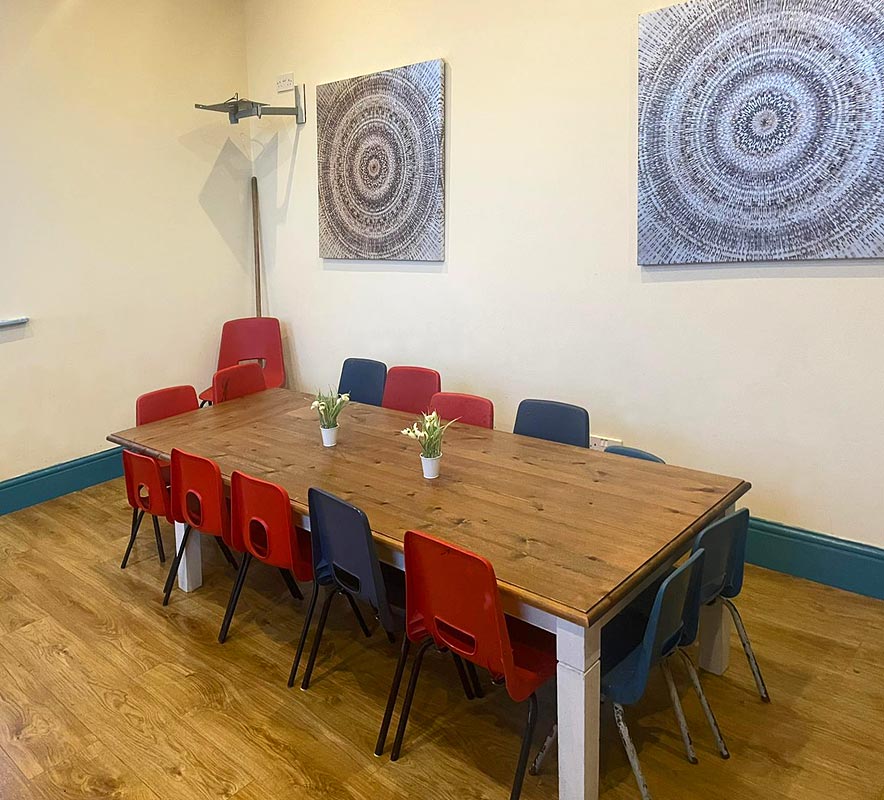
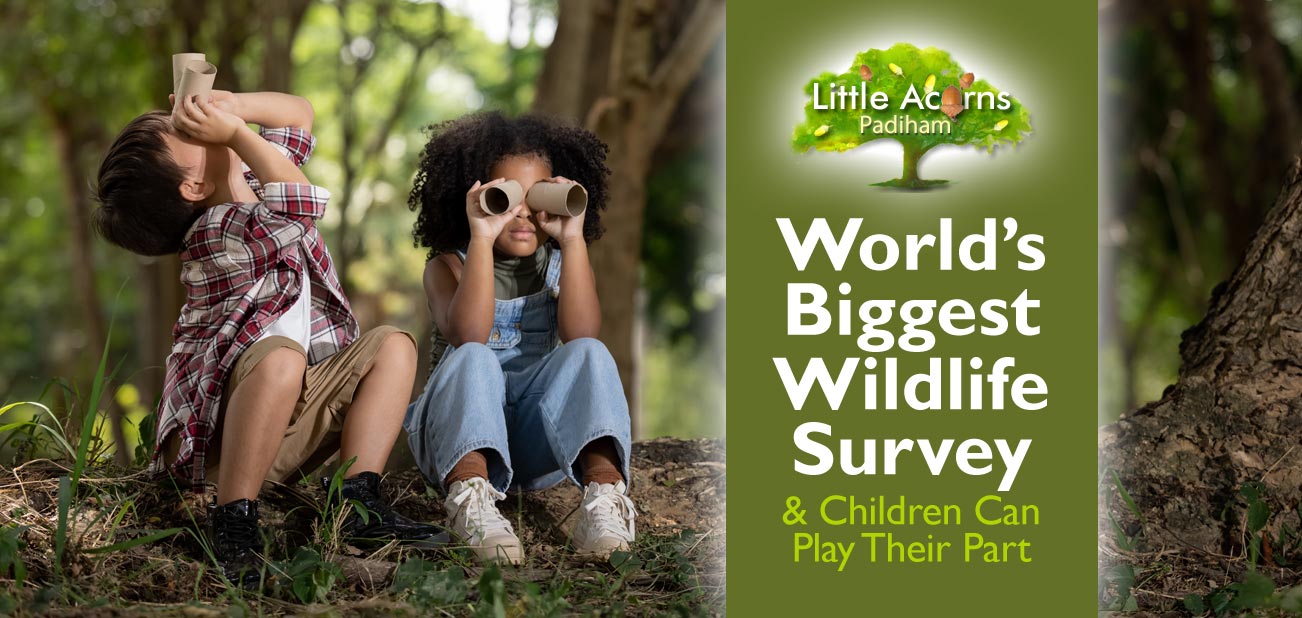
 Children, adults, and whole families are gearing up to take part in the world’s biggest garden wildlife survey in early 2025. Organised by the RSPB (Royal Society for the Protection of Birds), the Big Garden Birdwatch requires just one hour of your time during late January 2025. It’s free, hugely worthwhile, and will benefit nature, conservation, and children themselves. So, why not set a date for your diary and take part? Today’s post explains how to enrol, what to do, and how it will benefit all parties involved.
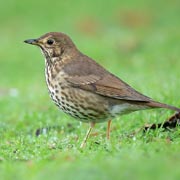 The Big Garden Birdwatch is designed to keep tabs on wild bird populations in the UK. It’s a survey that’s been undertaken across the UK every year since 1979 and allows the RSPB and conservationists to monitor whether any bird species are under threat. Sadly, survey findings in recent years have found this to be the case, with overall bird populations having declined by a staggering 38 million in the last 60 years. Song thrushes alone, for example, have declined by 80% and even the UK’s most populous bird species, House Sparrows, have declined by 57% since the survey began.
 The Big Garden Birdwatch is also a great way to get children outdoors, close to nature, and to introduce them to the concept of nature conservation. By taking part, children can contribute to bird conservation as well as directly benefit in a number of ways themselves. For example, they can
 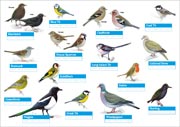 Enrolling your child or family into 2025’s Big Garden Birdwatch is easy and free. Simply
 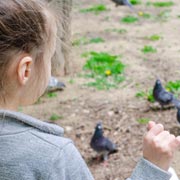 Decide on a natural spot where you’ll undertake your hour’s birdwatch. Your garden, local park or even a balcony will do fine.
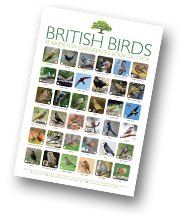 Enjoying Birdwatching?
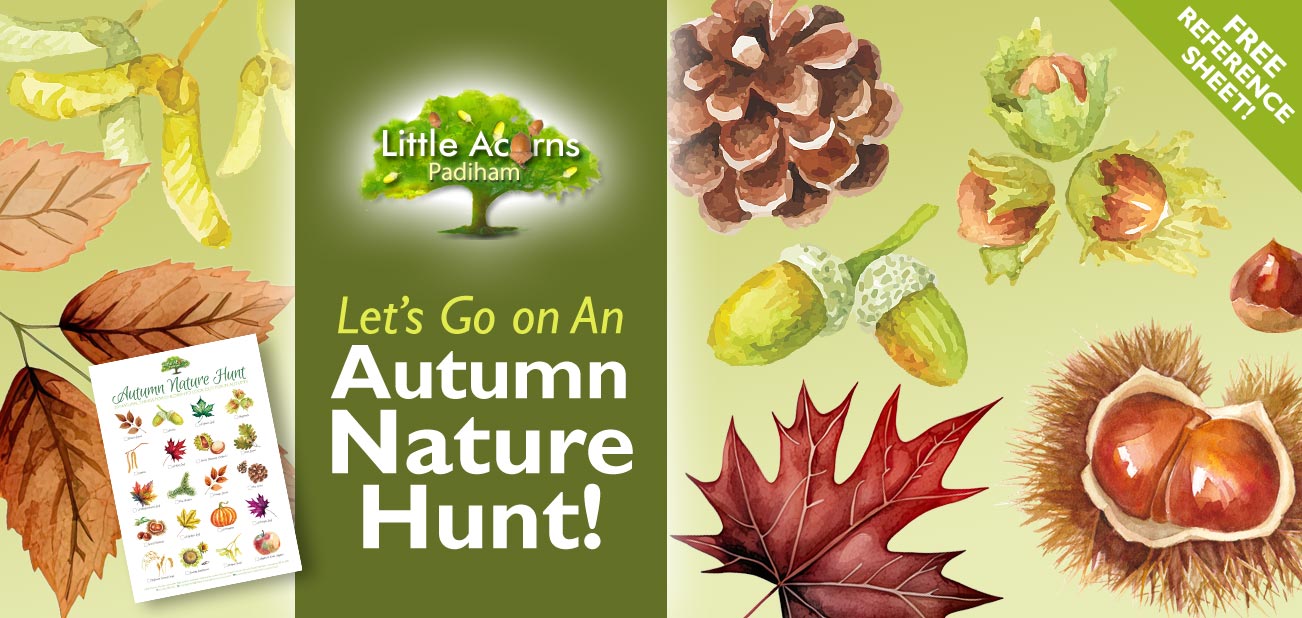
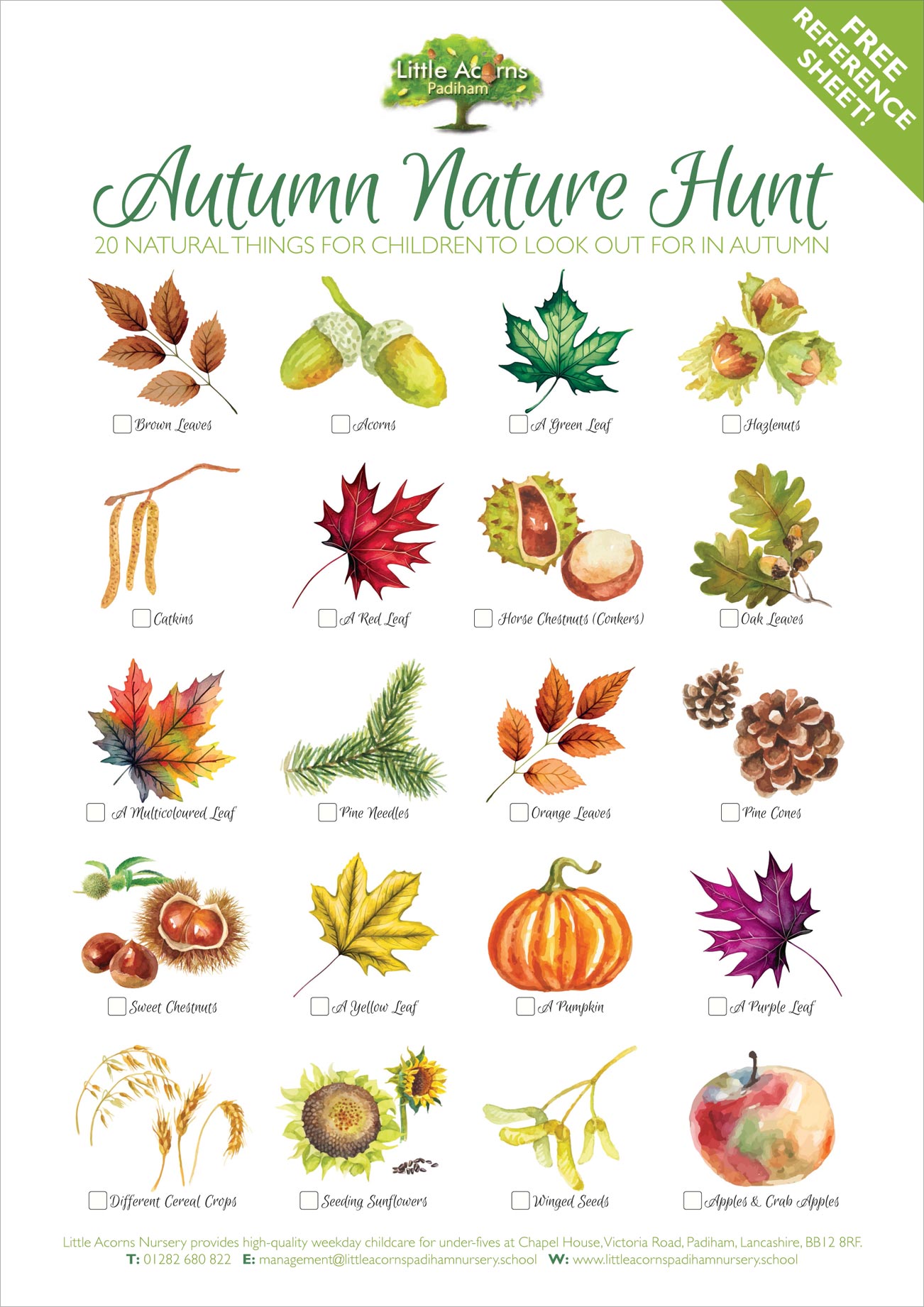
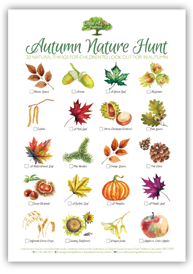 As leaves start to blanket the ground and the earthy scents of autumn begin to infuse the air, it’s the perfect time to engage children in a captivating adventure that celebrates the season. In today’s post, we’ll introduce you to an Autumn Nature Hunt, an exciting outdoor activity for children that’s not only entertaining but also educational.